










50 mm Fabric Venetian Blind
50 mm fabric venetian blind. The model joining the venetian’s fine light control with the textile softness of a fabric louvre.
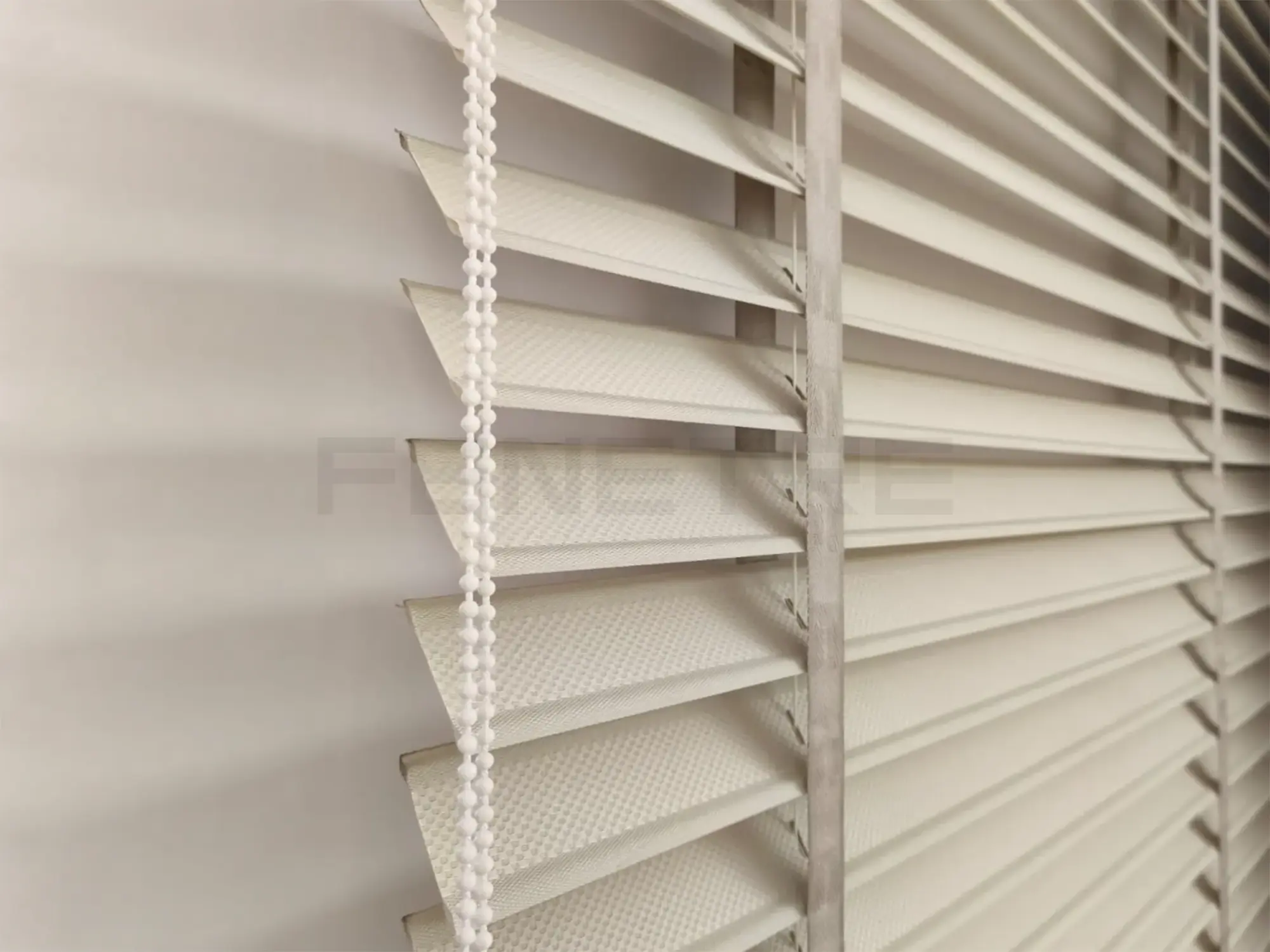
- Fabric LouvreVenetian function + textile texture.
- Soft LightThe fabric surface lets light through diffused.
- DecorativeA modern solution with a curtain look.
Who Is the 50 mm Fabric Venetian Blind For?
- Lounge
- Bedroom
- Living Area
- Hotel
- Reception
Joins venetian sensitivity with textile softness. For living and waiting areas avoiding the technical look.
50 mm Fabric Venetian Blind
- Stock Code:
- FS-JLK-01
- Availability:
- Produced to Order
- Brand:
- FENETRE
- Category:
- Fabric Venetian Blinds
The fabric louvres are cut to measure and shipped as a set with the rail carriers. A spare-strip option can be added to the order.
The fabric surface lets light through diffused. It is taken in living areas where a curtain character — not a technical look — is wanted.
Instead of the hard line of metal or wood louvres there is a textured textile surface. Although the system works on tilt logic, its effect in the room is close to a curtain. An in-between solution for rooms wanting both angle control and a soft look.
The textile card runs from pastel tones to natural neutrals. In the same room a choice is made to match upholstery and curtain fabric. Louvre replacement is the economical way to renew the texture.
Technical Specifications
50 mm Fabric Venetian Blind production spec table
- LouvreTextile-covered louvre surface
- Fabric
- Louvre WidthFabric-textured louvre size
- 50 mm
- MechanismCarrier arrangement on the rail
- Wand / Chain
- MountingRail fits to ceiling or wall
- Inside / Outside Recess
- ControlFilters light softly
- Lift + Tilt
- CompatibilityLiving areas
- Office · Home
The carrier rail is screwed to the ceiling or wall. The fabric louvres are hooked onto the carriers one by one.
As the louvres are attached individually a damaged strip changes easily.
The rail is fixed with screws and dowels. As the fabric is light, two bearing points are enough for most applications.
- The window or partition’s width-height value is recorded (cm).
- The fabric colour and texture preference is marked.
- The direction the louvres will stack to is noted.
- The rail plane is written. Ceiling, wall or above the window.
The fabric louvre is not recommended in wet volumes. For bathrooms the aluminium option is looked at. The rail wants a flat, solid surface.
Venetian function, curtain character
The system works like a classic venetian. The louvres rotate on the rail and light is let in or cut according to the tilt angle. The difference is in the surface. The fabric-covered louvre absorbs and spreads light — the room takes a soft brightness instead of hard shadow.
It is produced for users who do not want the technical stance of a metal louvre in the lounge or bedroom yet will not give up tilt control. The texture choice integrates with furniture and textiles — the closest venetian type to a curtain look.
Care and limits of the fabric surface
The fabric louvres are chosen by dust behaviour. Cleaning is done with the vacuum’s low setting and a brush attachment, swept in one direction with the louvres closed. On a stain a lightly damp cloth touches the spot. The louvre is not bent and is not soaked in water.
Volumes producing steam — the hob line in a kitchen, bathrooms and wet rooms — are not suited to the fabric series. The aluminium model is the right answer for that environment. In a stable, dry interior the fabric surface holds its form for years.
The louvres change one by one. For a worn or stained louvre the whole system is not dismantled. A spare-louvre order is built in the same tone using the colour code on the production record.
The louvres are cut to clear measurement and built as a set with the carrier arrangement; production finishes at the Gebze facility. The rail, hanging hardware and mounting diagram are in the package contents.
Texture and colour selection
The fabric louvre card runs from flat weaves to fine patterns. The choice is made with the room’s textile language. A plain linen look stays calm in a modern space; a fine pattern makes the window the focus in a bare-walled room.
A light-colour fabric diffuses daylight most softly. A dark tone strengthens privacy in the closed position. On a north facade a light tone preserves light; on a south facade a mid tone builds the glare balance.
On facades facing direct sun the textile surface’s UV fading is factored in. On glazing taking intense sun, light and semi-blackout textured options keep their first look longer.
The card sample joins the quote file. The texture sense stays incomplete on a screen. Sharing the existing fabric and furniture photo eases the tone match.
On hotel and office projects a bulk choice is made from the same texture card. A louvre list is drawn up floor by floor, room by room. Spare-strip stock added to the order speeds future repairs.
Rail arrangement and louvre movement
The fabric louvres hook onto independent carriers on an aluminium rail. Each louvre rotates on its own axis. The tilt control turns all louvres to an equal angle — fabric or not, the mechanism is venetian logic.
The rail is screwed to the ceiling or wall plane. Load bearing is light because the fabric is a lighter material than wood or metal. In front of partition glazing and sliding systems the rail plane is kept clear of the glass.
Over the years only the worn strips change. The rail and mechanism stay the same. This modular build is a long-term use advantage among textile products.
In places carrying representational value — reception, waiting lounge, hotel room — the fabric surface softens the hard technical look. As the rail arrangement stays the same, moving to a different texture later is also possible.
Colour and texture card
The fabric card runs from flat weaves to patterned surfaces. Pastel tones look airy in bright rooms. Dark textures build a strong contrast. A choice matching upholstery and curtain fabric unifies the space.
The texture choice also chooses the light behaviour. Tight-weave strips cut more light; fine textures give diffused brightness. A blackout texture in the bedroom, a semi-transparent texture in the lounge is recommended.
Questions About 50 mm Fabric Venetian Blind
Can the fabric venetian louvre be washed?
Does the fabric venetian provide privacy?
Is the fabric louvre the same as a vertical blind?
What if it stains?
Does the fabric louvre soften sound?
Do the louvres swing in wind?
Is it suitable in a home with pets?
Can the rail colour be chosen?
How long does delivery take?
Does the colour fade on a sunny facade?
Is it suited to an office partition?
Is the rail produced curved?
50 mm Fabric Venetian Blind — Get a Price
With the window size, fabric colour and stacking direction the 50 mm fabric venetian cost is quoted.