





















Honeycomb Blinds
Air trapped in hexagonal cells. The only interior blind family that breaks the thermal bridge at the glass edge.
Honeycomb Blind Categories
The same cellular system comes in different fabric, pattern and texture classes. The category matching the need is chosen.
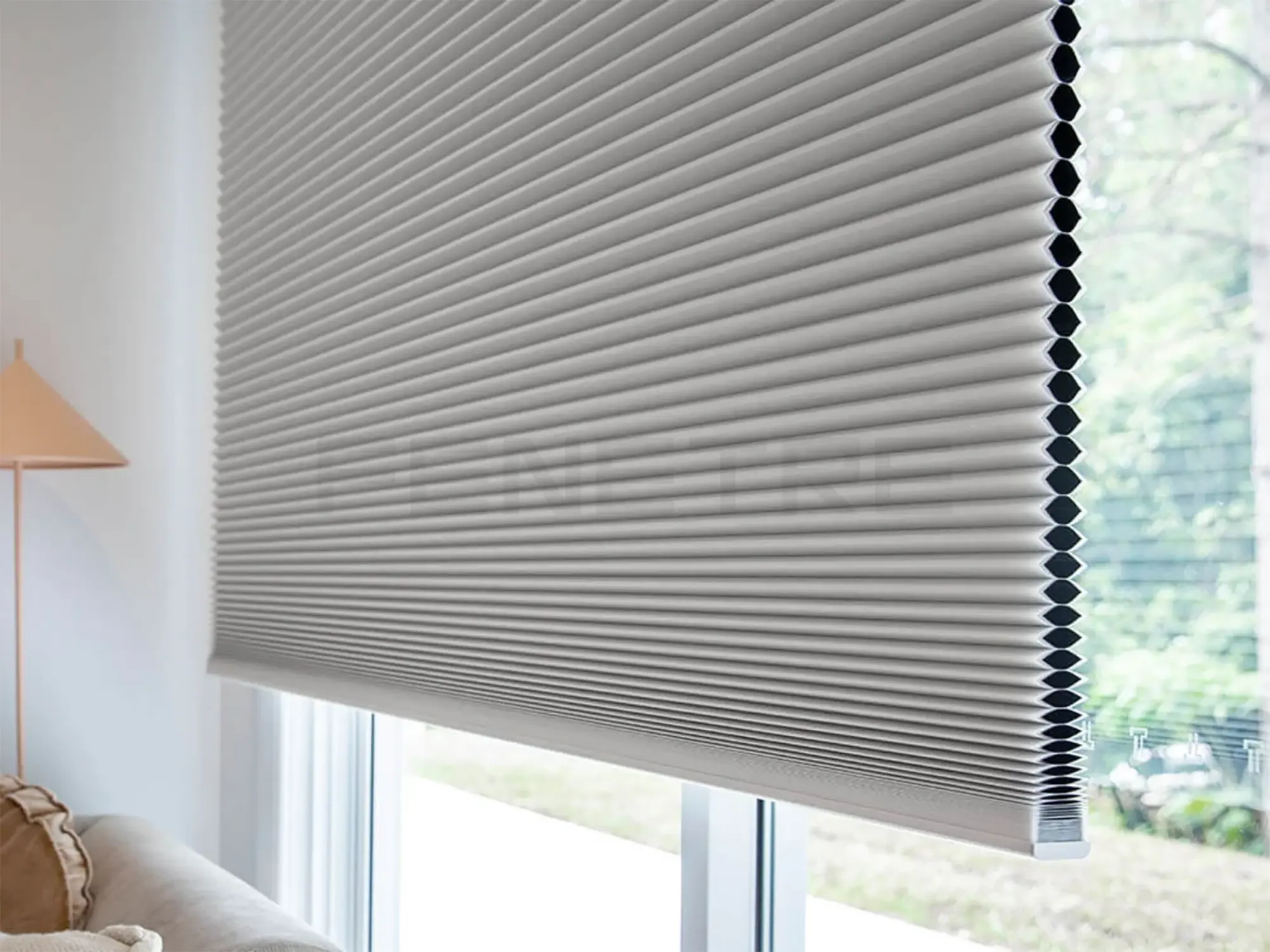
Plain Honeycomb Blinds
Unpatterned cellular fabric. The essential option carrying cell insulation on the plainest surface.
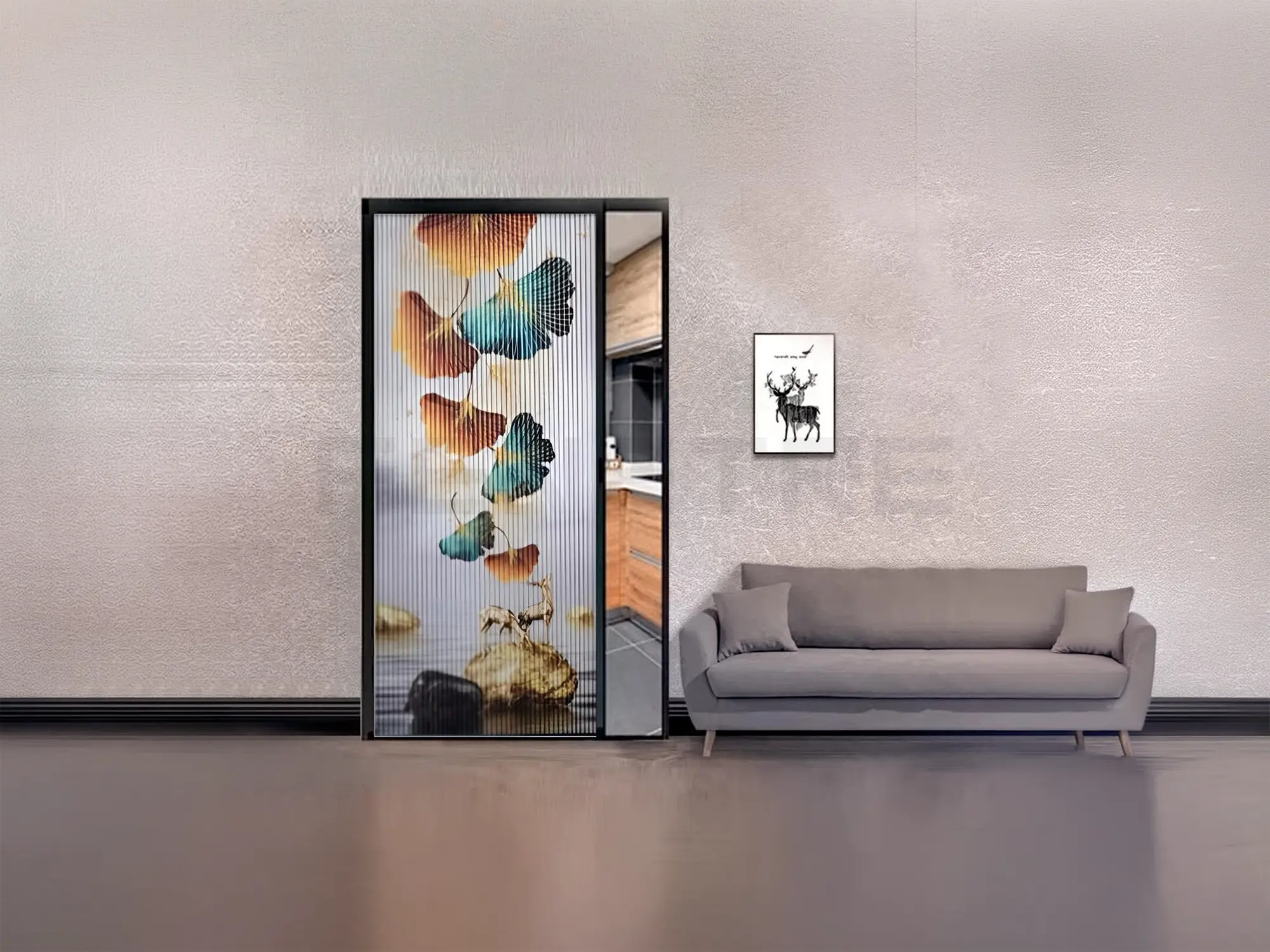
Printed Honeycomb Blinds
Motif-printed single-cell fabric. The pattern is applied to the surface without cutting the insulation.
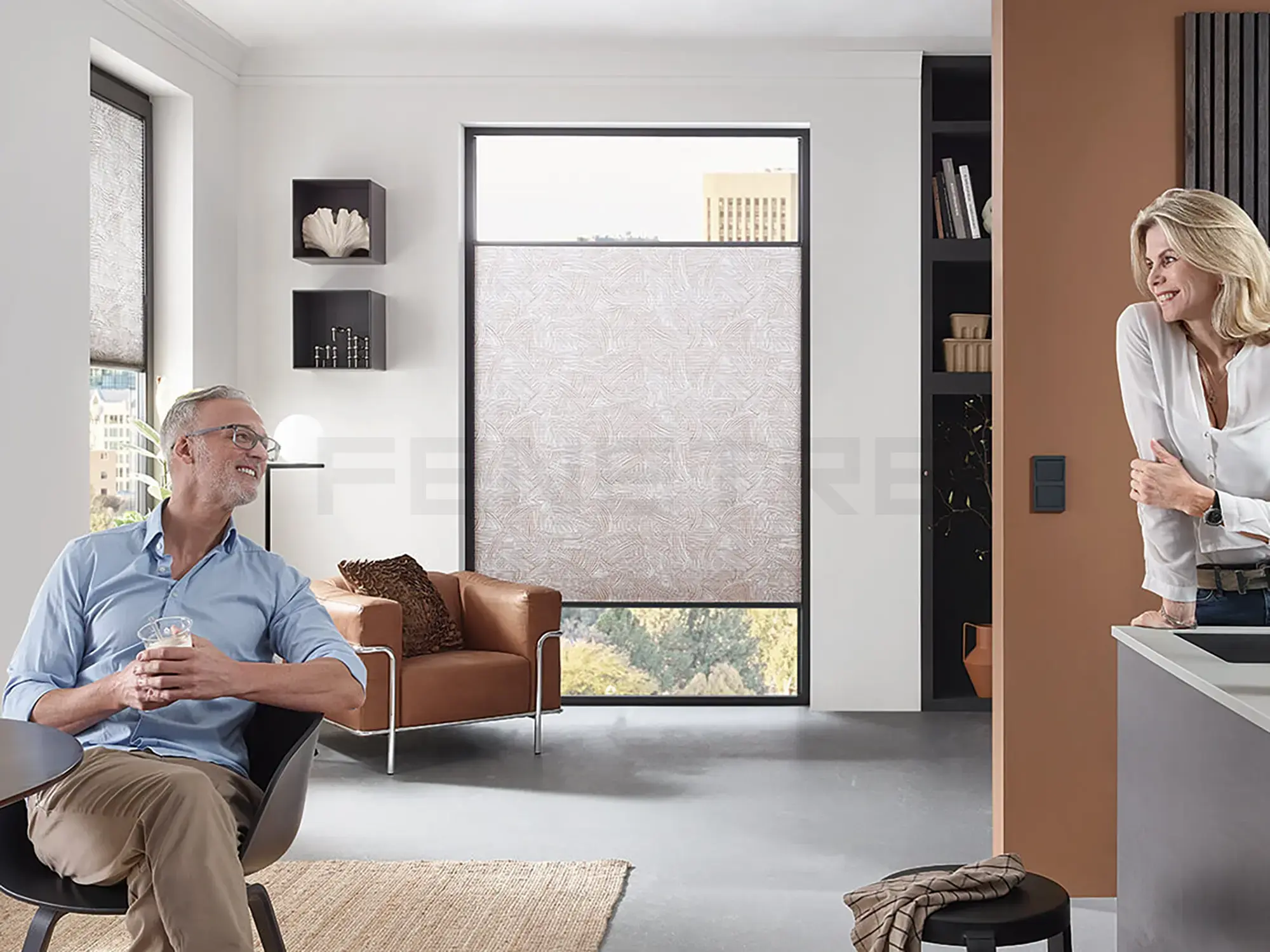
Textured Honeycomb Blinds
Embossed-texture single-cell fabric. The insulating surface gains depth with pattern.
The technical details of screw, adhesive, glazing-bead, hook and bracket bonds are listed by connection type on the Honeycomb Blind Installation Types page; the places the series are fitted are shown under application areas.
What Is a Honeycomb Blind?
A honeycomb blind is a cellular blind working with a fabric woven from hexagonal cells. Seen from the side, it looks like a honeycomb. The still air inside the cells is a natural insulator and reduces heat transfer at the glass edge.
It shares the same rail architecture as the pleated blind — the difference is the fabric. Pleated is a single flat layer; honeycomb is a cellular structure. If light filtering is the only need, a pleated blind is enough; when heat loss at the glass edge is also on the agenda, this is the right family. For a stronger barrier, see the double-layer Duette option.
Selection Guide
Which Glass Surface?
The honeycomb’s real job is where heat loss through glass is high. Three use cases are listed below.
Connection Types Compared
Ranked by drilling requirement and edge light leakage. Touch the type in a row to reach its mounting detail.
| Model | Drilling | Edge Leakage | Usage Note |
|---|---|---|---|
| Screw-Mounted Honeycomb | Yes | Standard | A permanent, solid insulation solution |
| Adhesive Honeycomb | No | Standard | No-drill fitting in rented homes and offices |
| Glazing-Bead (Portray) Honeycomb | No | Lowest | Inside the bead. Minimises edge light leakage |
| Hook-Mounted Honeycomb | No | Standard | Practical on folding glass and for detach-reattach needs |
| Bracket-Mounted Honeycomb | Yes | Standard | Frameless façades. Carried to wall or ceiling |
- Green. Preferred — no drilling or the lowest leakage
- Amber. Requires drilling or a standard leakage level
Edge leakage determines blackout success. Glazing-bead mounting gives the lowest leakage as it seats inside the bead.
Cell Structure
The fabric choice comes down to two cell depths. Single if the need is standard, double if the barrier must be strong.
- 25 mm
Single Cell
A single row of hexagonal cells. Standard insulation contribution, slim profile depth.
- Thermal Contribution
- Light Filtering
- Slim Profile
- Cell structure
- Single-layer hexagon
- Thermal contribution
- Standard
- Use
- Window and door glazing
- 50 mm
Double Cell
A cell within a cell. Two air pockets, a stronger barrier. Also known as Duette fabric.
- Thermal Contribution
- Light Filtering
- Slim Profile
- Cell structure
- Double-layer hexagon
- Thermal contribution
- High
- Use
- Conservatory and sleeping areas
Cell sizes are industry reference values. The catalogue cell size is written at the quote stage.
How to Order
The cellular fabric and mounting type are chosen by glass measurement. The process finishes in four steps.
- 01
Glass Measurement Sent
The glass measurement and a joinery photo are enough — requests sent via WhatsApp, phone or the form are gathered in one file.
- 02
Cell and Mount Chosen
Single or double cell? Which mounting? The heat loss and joinery type decide.
- 03
Cellular Fabric Cut
The cell fabric is prepared to size in Gebze. The delivery window is stated in the quote.
- 04
Fitting or Shipment
The install crew fits on site within the service area. For out-of-town addresses, a knock-down pack ships.
- Trapped AirThe air held in the hexagonal cells is a natural insulator. It breaks the thermal bridge at the glass edge.
- Top-Down/Bottom-UpMovement from both ends. Covers the street line while daylight still comes in.
- Motorised OptionRemote-controlled operation on high and sloped glazing. Scenario compatible.
Questions About Honeycomb Blinds
What is the difference between honeycomb and pleated blinds?
Single cell or double cell?
Does it really save energy?
Can it be fitted on a roof window?
Is it the right choice for a conservatory?
How are measurements sent?
Which Honeycomb Blind?
Question 1/2What is the priority?
Light level?
Recommended solutions
The two best matches for “Which Honeycomb Blind?” based on your answers — the scores stay with you, the reasoning is ours:
Both options matched strongly for Which Honeycomb Blind? — pick the one that fits your priority; if undecided, we clarify it at the survey.
Sheer Honeycomb
Cellular structure with a sheer look — the light stays, the insulation arrives.
Semi-Blackout Honeycomb
Insulation plus balanced light — for living and work areas.
To apply your “Which Honeycomb Blind?” result without measurements, see the measuring and installation guide; installation is free in Istanbul and Kocaeli, and in other provinces the installer partner network takes over.
Request a Quote for Your Window Size
For a cellular blind, the glass measurement is enough. A quote with a cell recommendation for your space arrives within 48 hours.