
























Zip Screens
The edge zip locks inside the channel. The wind cannot pull the fabric out.
Zip Screen Models
Six models — from outdoor to interior blackout, all on the zip-channel architecture.
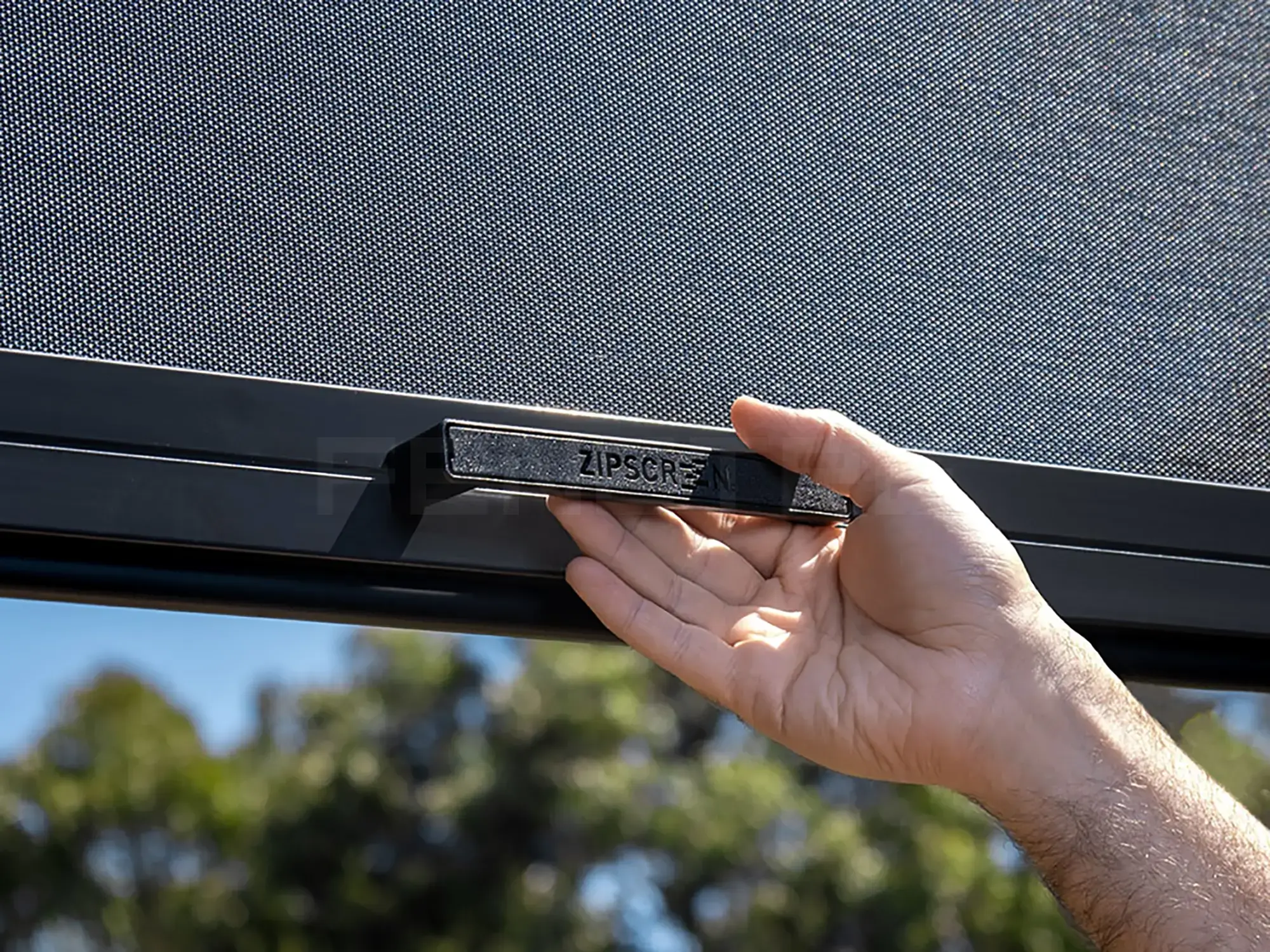
Manual Zip Screen
The crank-handle model. Needs no power line.
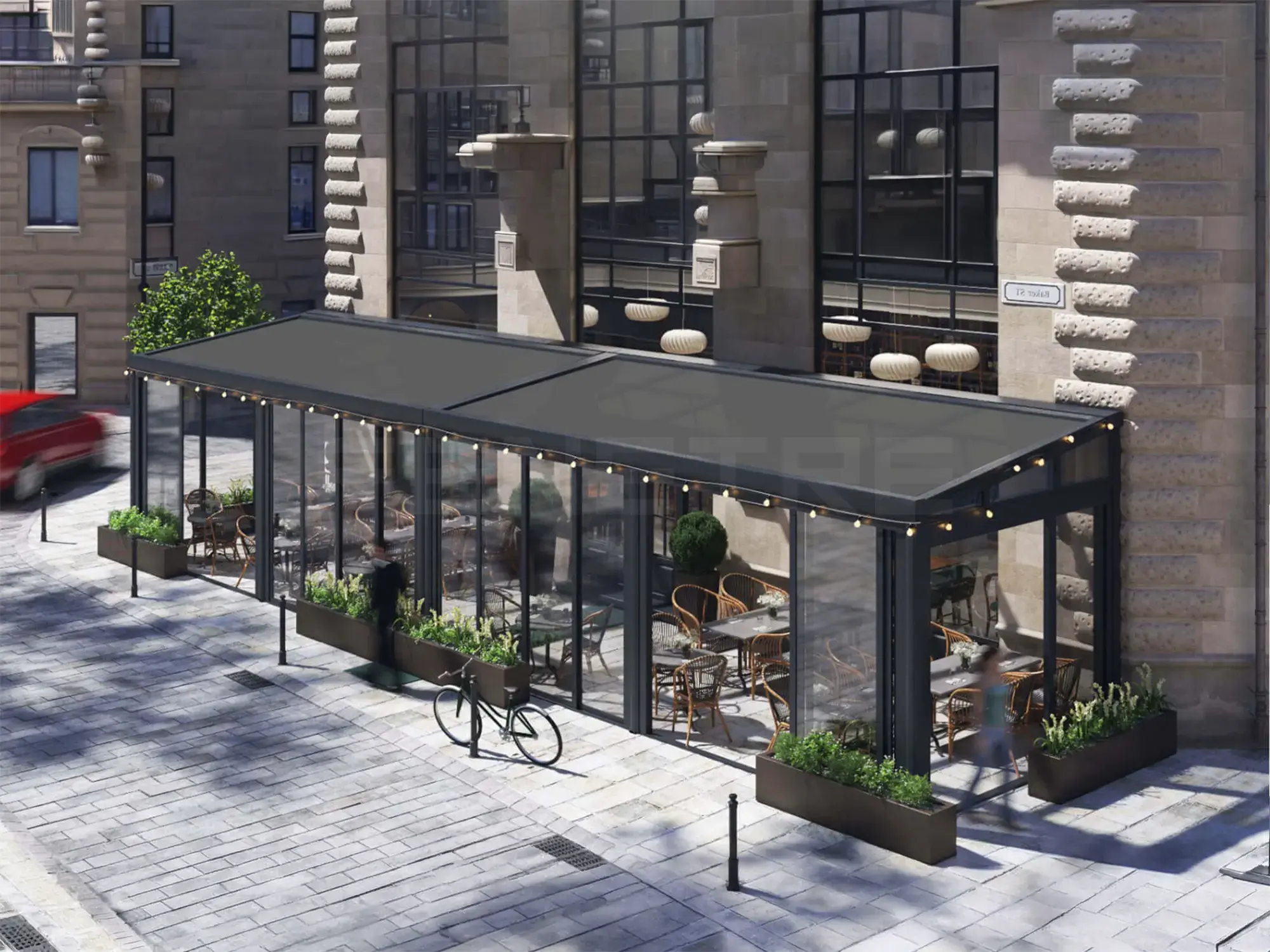
Ceiling Zip Screen
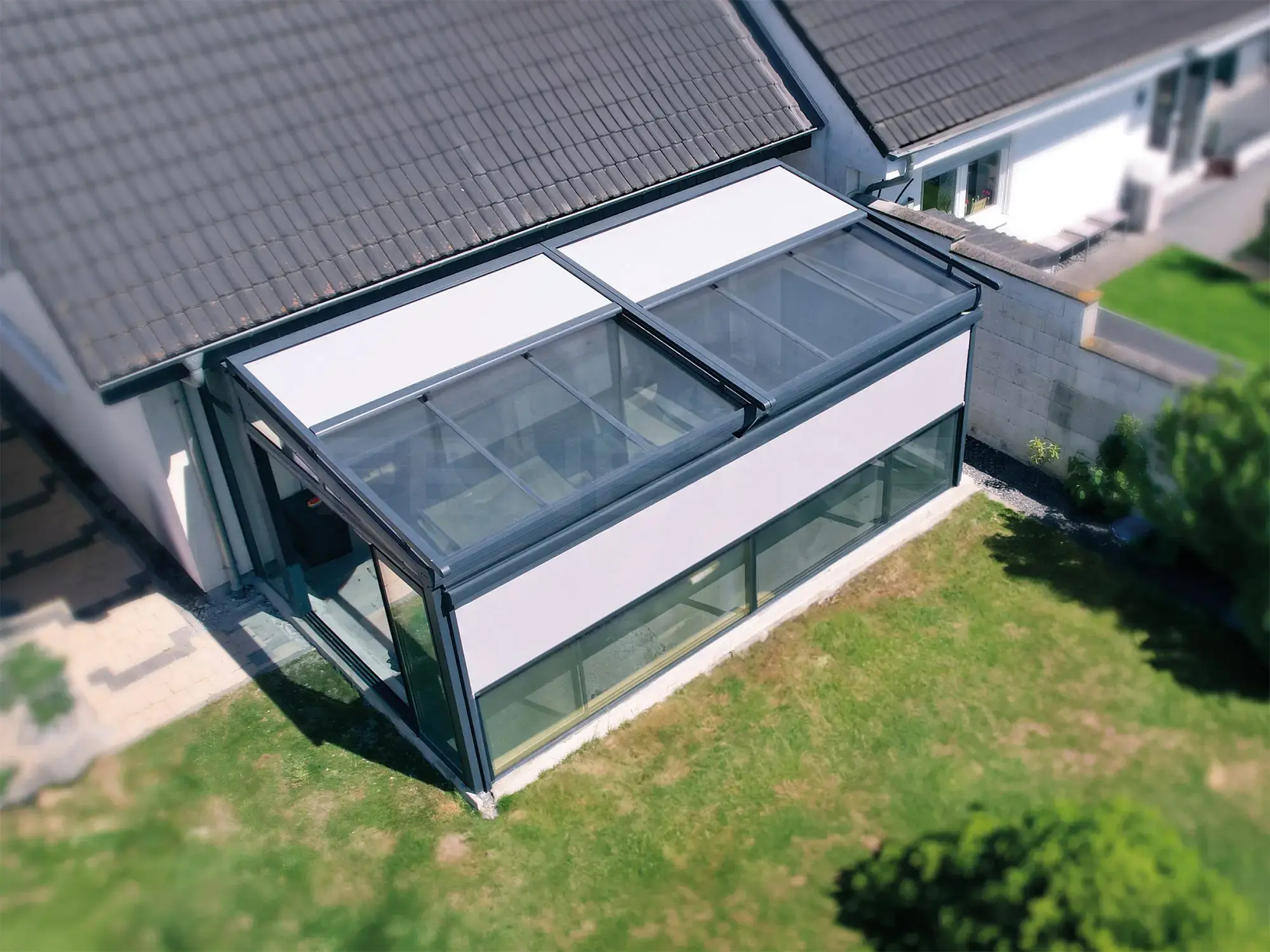
The model mounted on the horizontal plane over pergola and conservatory roofs.
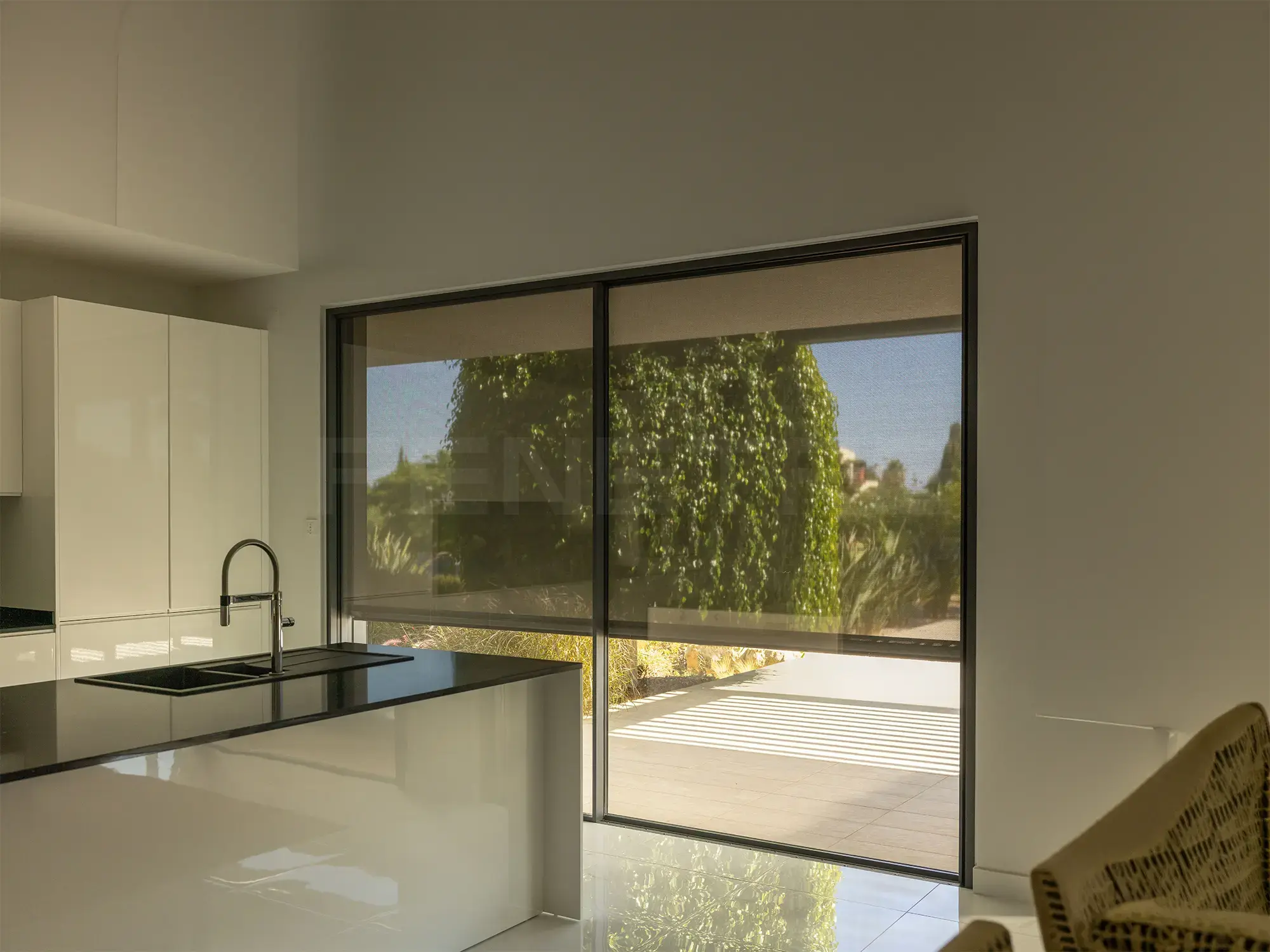
Transparent Zip Screen
Clear film fabric. Cuts wind and rain without blocking the view.
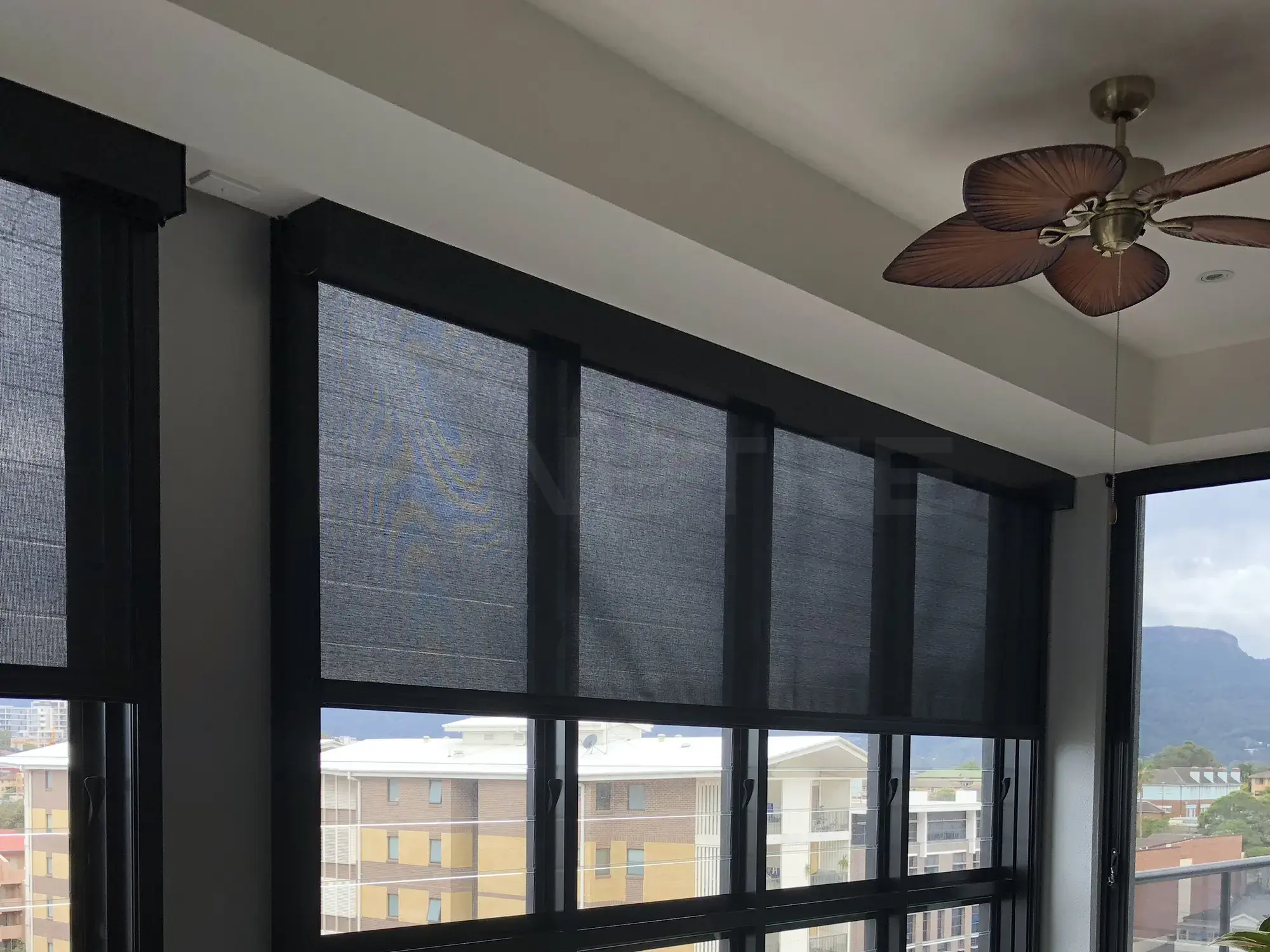
Interior Zip Screen
The interior blind with side channels. No light leaks at the edges — full blackout.
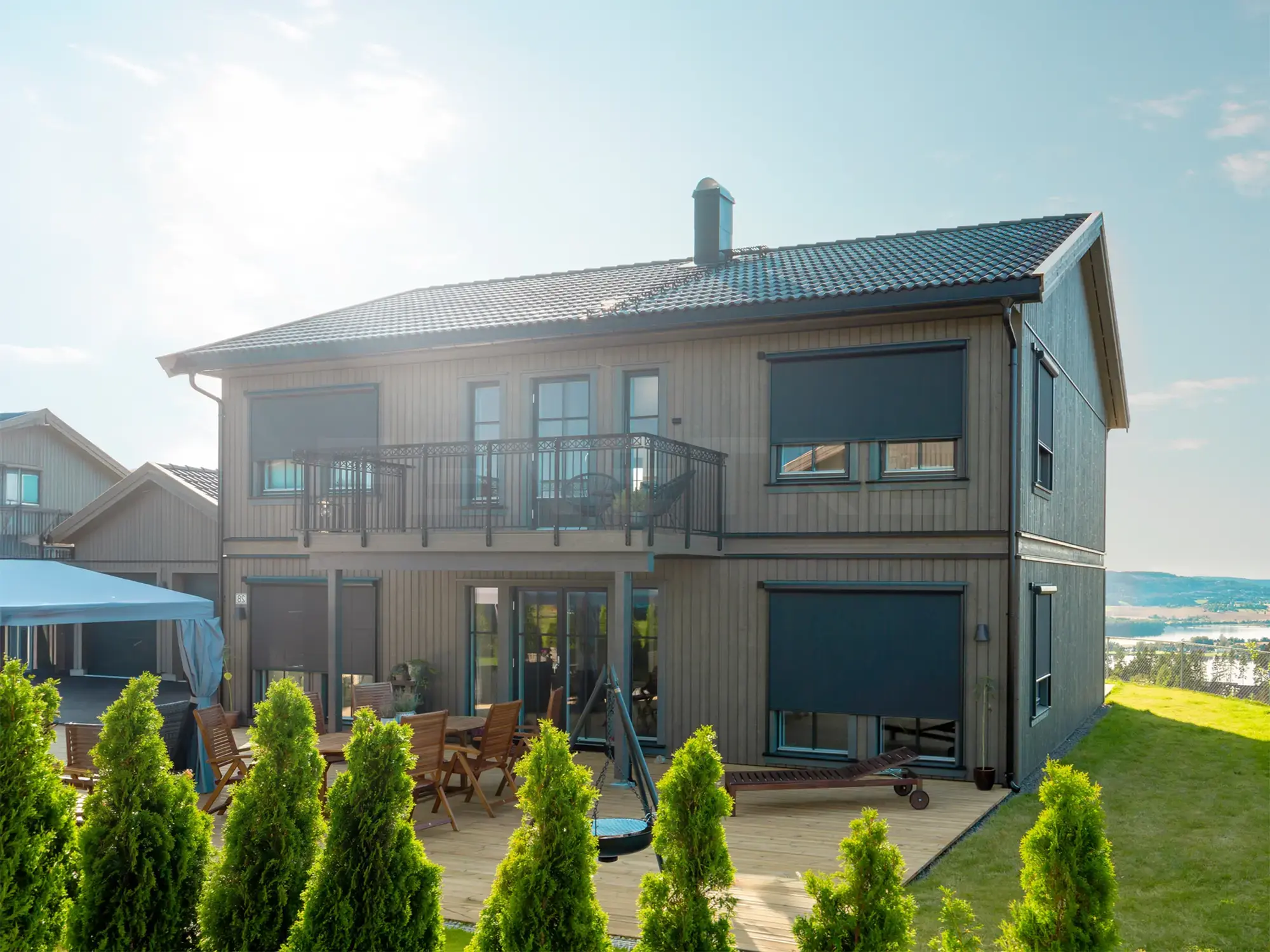
Outdoor Zip Screen
The wind-locked outdoor model for terraces, balconies and shopfronts.
Motorised Zip Screen
A remote-controlled motorised system. Opens with a single touch across wide openings.
What Is a Zip Screen?
A zip screen is a tensioned screen system in which the zips on both sides of the fabric stay locked inside the side guide profiles. The fabric cannot come out of the channel in wind — the system's defining feature and its difference from other outdoor screens.
An honest note: a zip screen is not a glass façade. It provides shading, an insect barrier and wind control while preserving ventilation and the view — it holds the solar heat in front of the glass rather than building a heating wall.
Selection Guide
Where Will It Be Applied?
The place of use sets the model. Four application styles are listed.
- Terrace and VerandaA wind-locked outdoor screen. Does not cut ventilation, does not block the view.
- Pergola RoofThe model mounted on the horizontal plane. Cuts the sun coming from above.
- Shopfront and FaçadeThe clear film does not block the view. Keeps wind and rain outside.
- Interior BlackoutThe interior model with side channels. No edge light leak — total darkness.
Which Zip Model?
The six models are ranked by drive type and place of use. Clicking a model in the table goes to its own page.
| Model | Drive | Wind Lock | Place of Use | System Note |
|---|---|---|---|---|
| Manual Zip Screen | Crank handle | Full | Outdoor | Needs no power line |
| Ceiling Zip Screen | Motorised | Full | Pergola, skylight | Works on the horizontal plane |
| Transparent Zip Screen | Motorised | Full | Shopfront, café front | View stays open. Wind and rain are cut |
| Interior Zip Screen | Motorised | — | Interior | Side-channelled. Full blackout |
| Outdoor Zip Screen | Motorised | Full | Terrace, balcony, façade | The standard wind-locked model |
| Motorised Zip Screen | Remote motor | Full | Wide openings | Runs automatically with the sensor option |
- Full. The zip channel stays locked in outdoor wind
- — interior model. Wind resistance is not needed
Wind resistance varies by EN 13561 class — the precise figure for the chosen system is confirmed at quoting.
Why the Zip Channel?
Outdoor screens come in three systems. The wind-resistance ranking is clear.
- The strongest
Zippered Channel (Zip)
The zips on both sides of the fabric stay locked inside the channel. It cannot come out in wind.
- Wind Resistance
- Insect Barrier
- Economy
- Wind resistance
- EN 13561 class 3–6 (per system)
- Insect barrier
- Full — closed edges
- Use
- Open façades, windy areas
- Medium
Wire/Spring Guide
The fabric is held by side wires. Enough in sheltered spots; it flexes in open wind.
- Wind Resistance
- Insect Barrier
- Economy
- Wind resistance
- Medium
- Insect barrier
- Partial
- Use
- Sheltered balconies
- Basic
Free-Hanging
No guides. Hangs by bottom-bar weight. The fabric sways in light wind.
- Wind Resistance
- Insect Barrier
- Economy
- Wind resistance
- Low
- Insect barrier
- None
- Use
- Indoors, areas without wind
Weaker systems may suffice in sheltered areas. On an open façade, the zip channel is the only safe option.
From Survey to Fitting
On outdoor systems the fitting is done on site. Channel alignment and tension are calibrated.
- 01
Show the Opening and the Surface
The width-height measurement and a photo of the mounting surface are enough. Arriving requests land in one record.
- 02
Fabric and System Chosen
Screen, transparent or blackout fabric with the sensor option. The wind class is picked per location.
- 03
Channel System Prepared
The zippered fabric and side profiles are produced to measurement. The lead time is clear on the order.
- 04
On-Site Fitting
On outdoor systems the install crew fits on site. Channel alignment and tension are calibrated in place.
The details of cassette, channel and façade mounting styles are given per space type on the Zip Screen Installation Types page; the planes where the series are used are shown under application areas.
- Zip-LockedThe fabric locks into the side channel with a zip. Wind cannot pull it out.
- Sensor EcosystemThe sun sensor deploys it; the wind sensor retracts it. The system protects itself.
- View PreservedScreen fabric filters the sun — it is not a glass façade. Ventilation and the view remain.
Questions About Zip Screens
Does a zip screen really withstand wind?
Can it be used in rain?
Does it let insects through?
Does it provide thermal insulation?
What is the maximum size?
How do the motor and sensors work?
How do I send my measurements?
Which Zip Screen?
Question 1/2Application direction?
Control?
Recommended solutions
The two best matches for “Which Zip Screen?” based on your answers — the scores stay with you, the reasoning is ours:
Both options matched strongly for Which Zip Screen? — pick the one that fits your priority; if undecided, we clarify it at the survey.
Vertical Zip — Motorised
In front of windows and terraces — remote-controlled zippered system.
Vertical Zip — Manual
Zippered outdoor protection for applications not wanting a motor.
Ceiling Zip
Shading over terraces and verandas — a horizontal zippered cover.
To apply your “Which Zip Screen?” result without measurements, see the measuring and installation guide; installation is free in Istanbul and Kocaeli, and in other provinces the installer partner network takes over.
Request a Zip Screen Quote for Your Terrace
The opening and a photo of the mounting surface are enough. A written quote within 48 hours, wind class included.