
























Transparent Zip Screen
Transparent zip screen. It works with a crystal-clear PVC film — it cuts wind and rain without blocking the view or the outside.
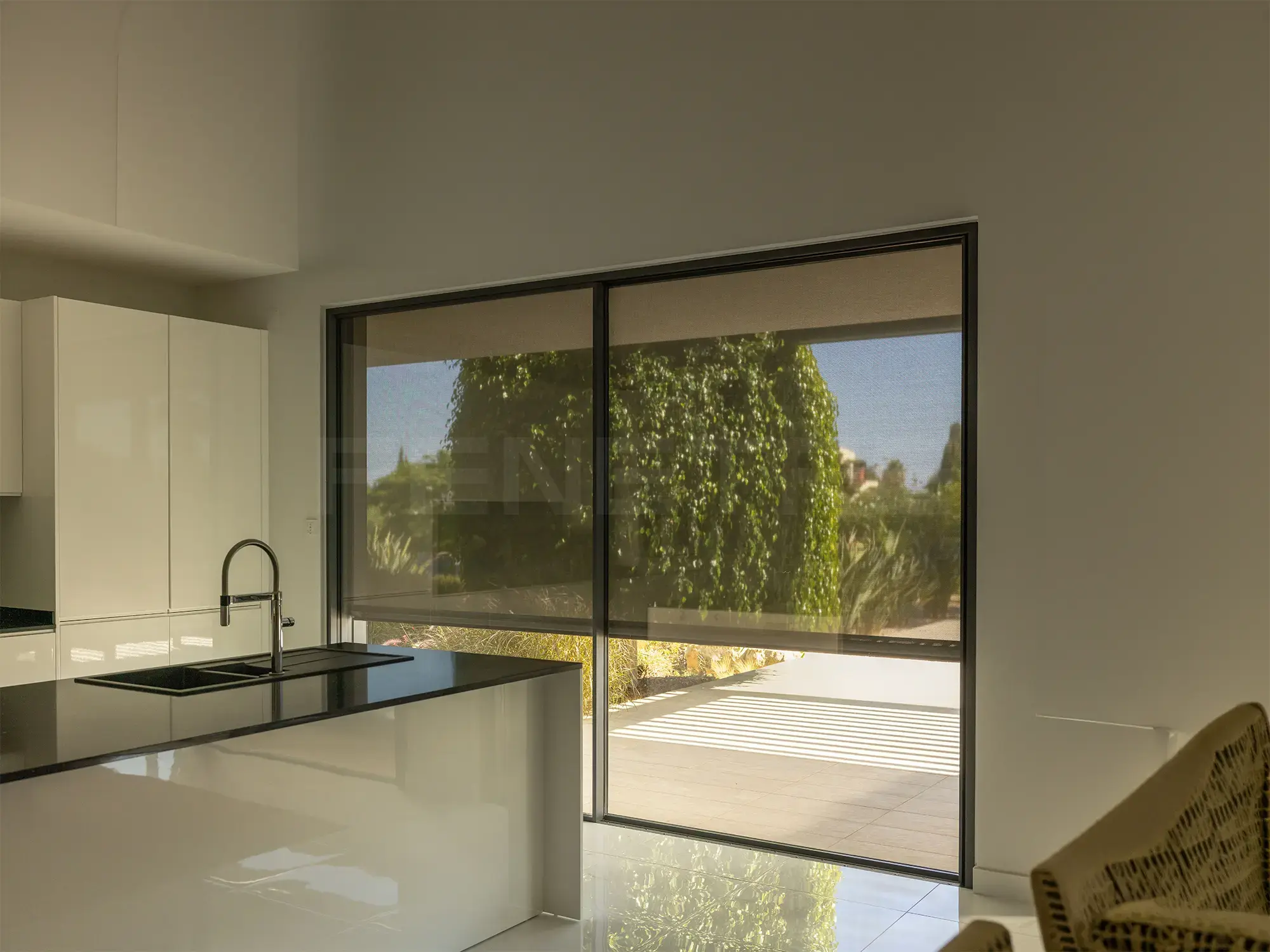
- Uninterrupted ViewThe clear film does not block the panorama.
- Weather ProtectionKeeps wind and rain outside.
- Four SeasonsEnables outdoor use in winter.
Who Is the Transparent Zip Screen For?
- Restaurant
- Café
- Terrace
- Shopfront
- Veranda
- Conservatory
The clear film does not block the view — it makes open areas usable in all four seasons.
Transparent Zip Screen
- Stock Code:
- FS-ZIP-03
- Availability:
- Made to Order
- Brand:
- FENETRE
- Category:
- Zip Screens
The clear film and zipped channel are made to measure — weather protection without cutting the view.
Technical Specifications
Transparent Zip Screen production figures
- CassetteA box profile protecting the film
- Aluminium Box
- FabricCrystal-clear PVC film
- Clear PVC Film
- Side ChannelA channel lock that does not cut the view
- Zip Locked
- MechanismHandle or motor drive
- Motorised / Manual
- MountingScrewed to the facade structure
- Screwed — Outdoor
- CompatibilityCommercial terraces and shopfronts
- Restaurant · Café
The cassette–channel set is screwed to the exterior surface.
The clear film is fitted under tension; the in-channel lock protects it against outside effects.
- The width and height of the horizontal opening are read (cm).
- The structure it will fix to is noted — pergola profile, wall or a metal frame.
- Once the measurements and an application photo are sent, the film thickness is recommended.
Film thickness is chosen by use intensity — a distinction is made between commercial premises and homes.
The structure of the clear film
The transparent zip uses a PVC-based clear film instead of fabric — the film preserves the view like glass but cuts wind and rain. It is the way to protect a balcony from the weather without turning it into a glass balcony.
Film thickness decides durability — a thin film is flexible but open to scratches; a thick film keeps optical clarity and carries the wind load. For balcony use the thick series is the standard choice.
The film’s calendered surface sharpens the view — a wavy film distorts it. Working under tension inside the rail, the film stays flat and shows the outside at near-glass clarity.
Care and usage realities
The clear film’s enemy is scratching — contact with a hard object or a blade leaves a permanent mark. Cleaning is done with a soft sponge and lukewarm water; chemical cleaners fog the film.
In winter the film stiffens — PVC loses its flexibility at low temperatures and the risk of cracking under a sudden impact appears; keeping the film rolled up is recommended in the cold season.
In steamy conditions the film fogs — the indoor-outdoor temperature difference produces condensation on the film surface. The fog clears as it dries and is not permanent; balcony ventilation balances the effect.
A torn film is replaced — a scratched or torn film is swapped for a new one fitted to the same frame; the frame and the mechanism stay in place.
The limits of the transparent zip
The clear film mimics glass’s function but is not glass — optical clarity is at glass level while scratching and fogging behave differently. Against the permanence of a glass balcony, the zip offers retractability.
The retracted film stays on the roll — when not in use the balcony stays fully open and the film remains on the roll. For a user wanting an open balcony in summer this transition is the biggest advantage.
In wind the film ripples — the edge lock inside the rail holds the film but the surface is a flexible material; wind movement is in the film’s nature and produces no permanent deformation.
Under apartment management rules a transparent zip does not count as a glass balcony — it is not a permanent building element and does not alter the facade. In buildings where glass balconies are banned it is the only accepted solution.
Veranda and pergola enclosures
The transparent zip turns veranda edges into closed space — the film cuts wind and rain while preserving the view, and the terrace season extends into winter.
It is the standard on restaurant and café outdoor areas — the customer keeps the view and gains weather protection; with heating in winter the outdoor area becomes closed space.
Joint lines are laid out by panel count — a wide opening is split into sections and each section works independently; the vertical joint profile crossing the view is kept to a minimum.
The film’s edge locks do not open in wind — the zipped side guides lock the film inside the channel; even in harsh wind the film stays in the opening.
Production and order stages
The guide and lock system is chosen by wind conditions — zipped or locked guides are taken by wind class; the region note goes into production.
Winter storage information comes with the product — the film’s rolling layout and storage conditions are explained in the guide; wrong folding can crack the film.
Decision points
Where view and panorama come first, the clear film is chosen — the glass-effect film stops wind and rain without cutting light and sight.
The clarity expectation should be bounded — the film is not as clear as glass; if slight haziness is unacceptable, an open edge or screen fabric is considered instead.
In cold-climate regions usage is planned — the stiffening film is stored rolled up in winter; four-season use asks for the thick film and careful handling.
Questions About Transparent Zip Screen
Does the clear film scratch or fog?
Does a transparent zip provide thermal insulation?
Other Zip Screens Models
Transparent Zip Screen is built around uninterrupted view, weather protection, four seasons. The remaining 5 models in the Zip Screens range are listed.
Transparent Zip Screen — Send Your Measurements
Send the opening width-height and the use type to receive the transparent zip price.