






















50 mm Wooden Venetian Blind
50 mm wooden venetian blind. The proportion accepted as classic in wooden venetians — a wide view when open and a firm presence when closed.
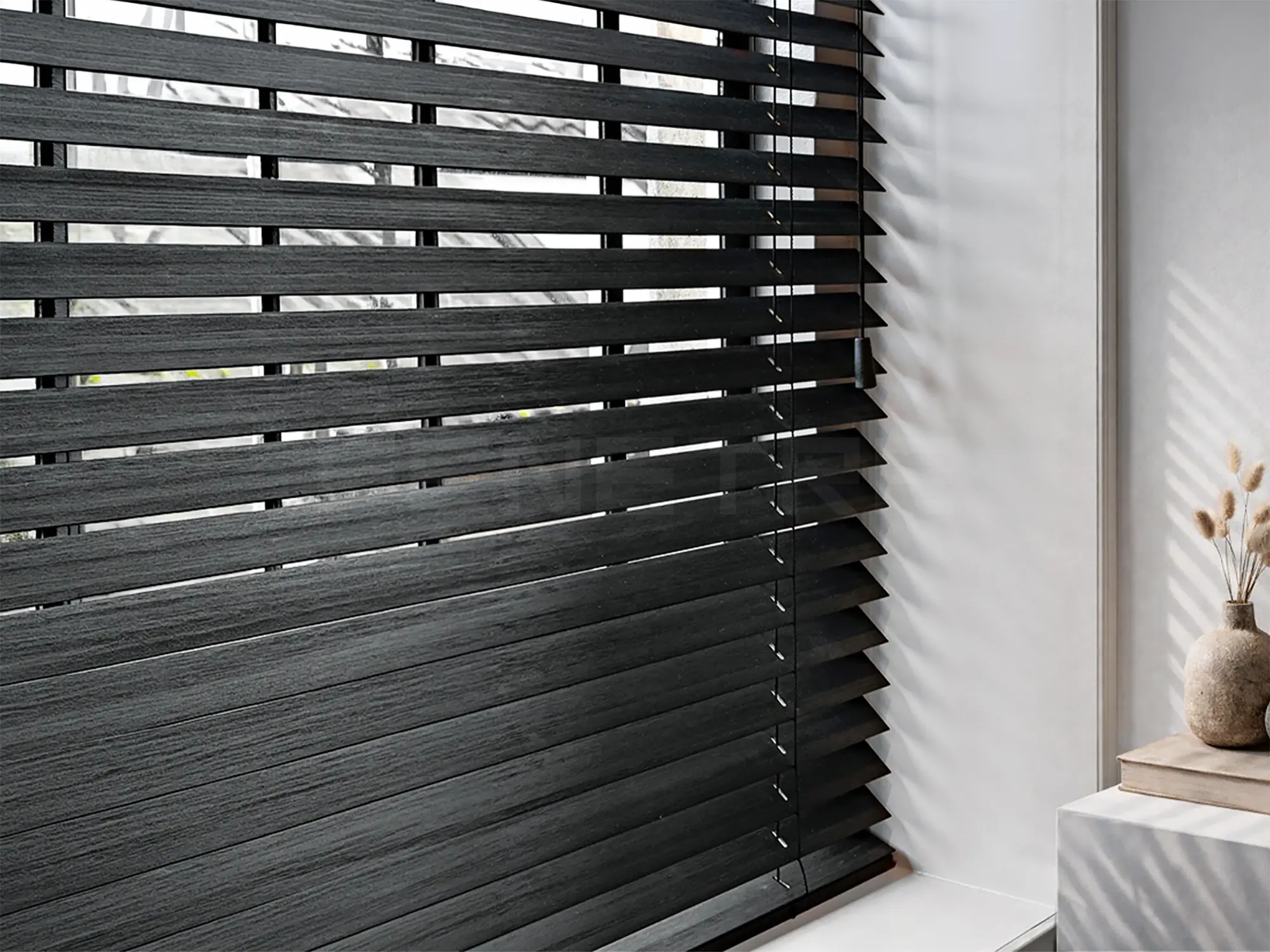
- Natural WoodThe solid texture of the wide louvre.
- Wide ViewMaximum openness in the open position.
- Classic ProportionThe standard choice in wooden venetians.
Who Is the 50 mm Wooden Venetian Blind For?
- Lounge
- Bedroom
- Hotel
- Café
- Office
The classic proportion in wooden venetians — a balance of wide view and prestige, a natural surface merging with furniture.
50 mm Wooden Venetian Blind
- Stock Code:
- FS-JLA-02
- Availability:
- Produced to Order
- Brand:
- FENETRE
- Category:
- Wooden Venetian Blinds
The classic-proportioned wooden louvres are balanced to the opening — dowels, brackets and surface-protective packaging are included in the shipment.
The size that shows wood’s prestige most balancedly in lounges and on wide windows — the louvre gap does not restrict the view.
As the louvre width grows, fewer pieces stack on the same height, the gaps open up and the wooden surface area becomes prominent — in volumes wanting both aesthetics and function, like a lounge, this balance makes 50 mm the classic choice.
The motorised option manages the remote from high-ceilinged spaces — tilt and height adjust without handling cords and wands; on the manual model the standard lift layout remains.
Technical Specifications
50 mm Wooden Venetian Blind build specification
- LouvreA natural-wood surface texture
- Natural Wood
- Louvre WidthThe classic-proportioned louvre width
- 50 mm
- MechanismTilt adjustment via the wand
- Wand / Chain
- MountingDowel mounting on the bearing surface
- Inside / Outside Recess
- ControlA wide view when open
- Lift + Tilt
- CompatibilityLounge and office windows
- Office · Home
The mounting brackets hold to the wall or ceiling with dowels — the wooden headrail’s weight wants a bearing plane.
The lift and tilt mechanisms arrive fitted.
The blind headrail seats onto the brackets and the lift cord is tensioned — even tension keeps the louvres flat and aligned.
- The window’s inner-opening measurements are recorded (cm).
- The mounting surface is stated — concrete, wood or plaster.
- The top distance the louvre stack will occupy is noted.
- If there is more than one window in the same room, the count and the wall margins between them are sent.
A 50 mm louvre forms a mid-height stack when gathered — the opening-sash collision is checked; on a plaster surface rear support is needed.
What the classic proportion means in a room
50 mm is the louvre width referenced for decades in wooden venetians — relative to a tall window it sits neither dense enough to tire the eye nor sparse; closed, the wooden surface reads like a solid panelled facade.
In the open position the louvre gap stays wide so most of the outside view remains — in lounges facing a garden or a panorama, you can watch the view without lifting the blind.
In a bedroom, a half tilt directs the morning light to the ceiling — the room brightens but no harsh sun falls on the bed line; view, light and privacy are all provided by a single mechanism.
Weight and mechanism balance
The 50 mm wooden louvre is noticeably heavier than its aluminium counterpart — that weight also gives the blind its calm, solid presence when closed; the lift force is balanced by a geared mechanism so the cord draws one-handed, without hesitation.
On a wide window the blind is produced as two separate systems instead of one headrail — each half works independently and the lift weight splits; the production decision comes from the opening width and the louvre tonnage, recommended on the order form by measurement.
Gathered, the louvres stack above the window — in the wood series this stack is thicker than aluminium; where a fully clearing opening is wanted, a cornice allowance is taken first and the system’s bracket spacing is set accordingly.
Mounting and long life
The wooden headrail is heavier than the aluminium series — the brackets therefore tie to the bearing surface with dowels; on a weak surface like plasterboard, a recess or concrete plane is targeted instead of fixing directly.
The louvres carry a UV-resistant paint and lacquer layer — they work unfaded on a south facade for a long time; cleaning is with a lint-free cloth, with no soaking or leaving wet.
Made-to-measure production is finished at the Gebze facility — the louvre count is taken by the glazing height; the tilt wand and lift cord arrive fitted, and dowels, screws and the mounting diagram go into the package.
Tilt scenarios through the day
In the low morning sun the louvres tilt slightly upward — light reflects off the ceiling and no glare reaches eye level; at noon a half close is enough, easing the heat pressure without darkening the room.
Before the interior lighting comes on in the evening the louvres are brought to fully closed — on ground floors and facing buildings the inside closes off; when watching TV, screen reflection is cut by the tilt.
At a window in front of the dining table or seating group, a single move changes the light layout — the dim-to-bright transition happens without lifting the blind; this flexibility is the use value that separates it from a plain roller or a curtain.
On a wide facade a two-section layout adds flexibility — the sun-facing wing closes while the other stays open; which side of the lounge receives light stays in the user’s control.
Multiple windows and integrity
Where a lounge has two or three windows side by side, all of them get the same louvre width and tone — mixed sizes break the facade; the window count and the gaps between are stated together on the order.
Where there is a wall margin between windows each is produced as its own headrail; on adjacent glazing the headrail line is kept at a common height, and louvre tones are chosen from the same timber batch to prevent colour difference.
On commercial orders a single sample approval covers all floors — using the same timber batch evens the colour distribution; each window is labelled at delivery and the installation plan is drawn room by room.
Questions About 50 mm Wooden Venetian Blind
Is a 50 mm wooden venetian heavy?
How is the view in the open position?
Does it collide with an opening window sash?
Can a motor be added?
Is the lift cord safe for children?
Does 50 mm wood suit a kitchen?
Is every louvre the same pattern?
Can it be used with an insect screen?
Can a motor be fitted later?
How are wooden louvres wiped?
Can it be used with a curtain?
Is there fading on a south facade?
Is installation included?
Other Wooden Venetian Blinds Models
50 mm Wooden Venetian Blind is built around natural wood, wide view, classic proportion. The remaining 2 models in the Wooden Venetian Blinds range are listed.
50 mm Wooden Venetian Blind — Get a Price
Send the glazing width-height and the mounting surface to get an exact figure for 50 mm wooden — multi-window orders are priced in a single job.