
























Roller Blind
Roller blind. The classic roll-up system in which the fabric winds onto an aluminium tube and works through a chain mechanism.
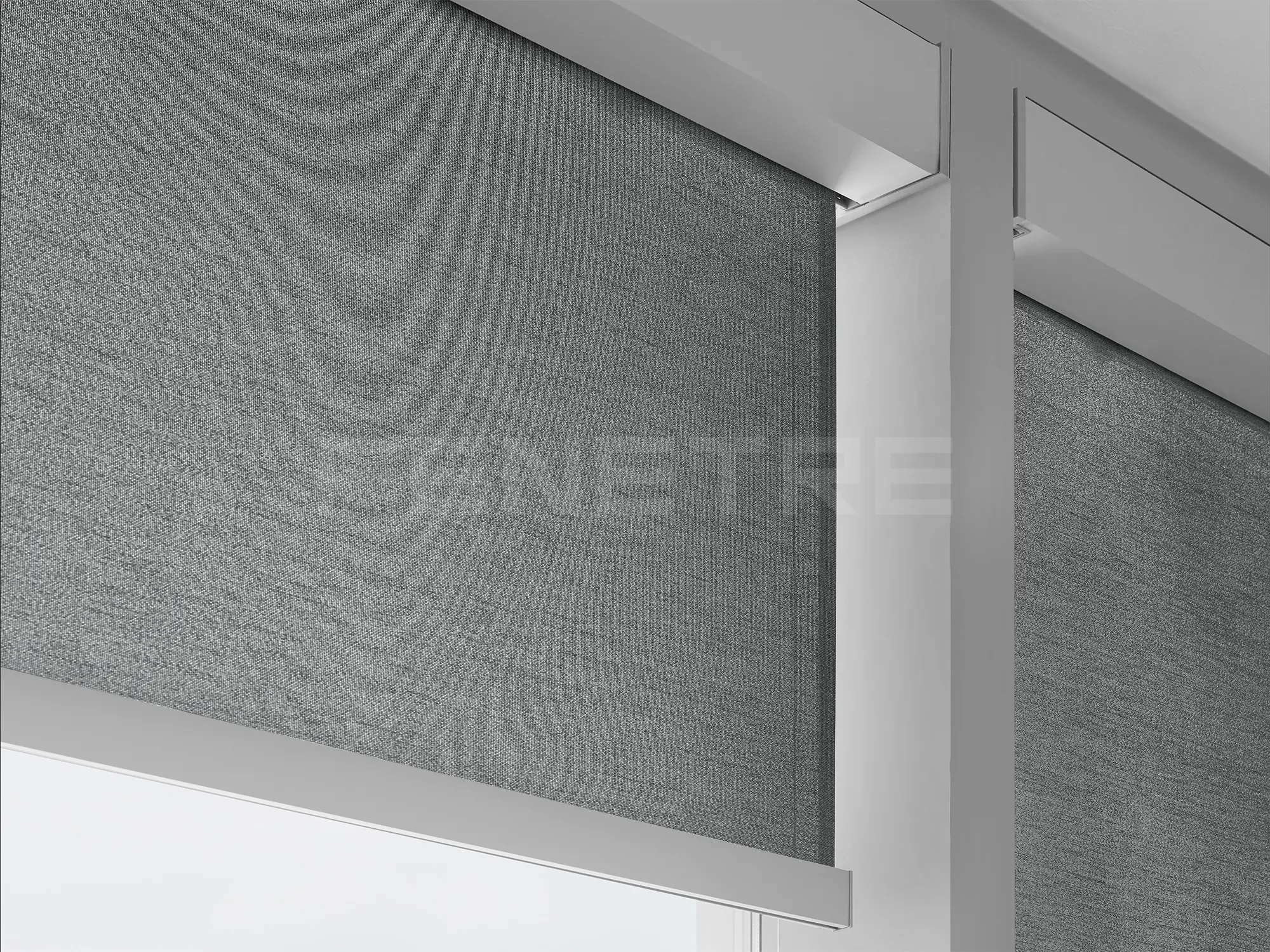
- Made to MeasureProduced exactly to the window.
- Wide Fabric RangeFabric options from sheer to blackout.
- Chain ControlA smooth open-close mechanism.
Who Is the Roller Blind For?
- Lounge
- Bedroom
- Kitchen
- Office
- Children’s Room
The classic system that suits every room — from sheer filtering to blackout through the fabric choice.
Roller Blind
- Stock Code:
- FS-PRD-01
- Availability:
- Built to Order
- Brand:
- FENETRE
- Category:
- Curtains
Fabric and mechanism are joined to measure — it arrives with the chain layout pre-set.
A fabric and colour range running from sheer to full blackout suits every room — it mounts on the wall, the ceiling or inside the recess.
Technical Specifications
Roller Blind manufacturing spec sheet
- FabricA fabric range from sheer to blackout
- Roller (non-Zebra)
- TubeAluminium tube winding the fabric
- Aluminium
- MechanismA smooth rolling layout
- Geared Chain
- MountingThree mounting-surface options
- Wall / Ceiling / Recess
- ControlGraded control by chain
- Chain (opt. Motorised)
- CompatibilitySuits every room type
- Home · Office
The tube mechanism seats on mounting brackets; the brackets hold to the wall, the ceiling or inside the recess.
The chain side is stated on the order — a child-safety device is included.
- The glazing’s width and height are recorded (cm).
- The direction the fabric winds and the chain side are written.
- The fixing point is taken — inside recess, wall or ceiling.
On inside-recess fitting the tube diameter needs a depth allowance — the clear-depth note is enough.
How the roller blind works
The fabric winds onto the top tube as a single piece and lowers through the chain mechanism — the rolled fabric forms a slim roll above the tube. This build gives the blind a flat surface both closed and open.
Chain control is managed one-handed — the mechanism’s gear ratio sets the fabric’s lowering speed. On heavy and wide rollers the unit is taken with a reduction gear: the chain pull stays constant while the fabric lowers under control.
The bottom profile of the roller keeps the fabric taut — in an exposed position its weight holds the fabric steady, which removes flapping noise on balconies and in front of windows.
Fabric choice and use area
The roller blind’s function comes from the chosen fabric — the sheer series softens light, the dimout series shades, the blackout series gives full darkness. The same mechanism is produced with three different fabrics: the mechanics stay, the result changes.
In kitchens and offices a wipe-clean fabric series is chosen — a surface that does not hold stains reduces cleaning to a single wipe, while in bedrooms the blackout series is considered by the darkness expectation.
On a narrow window the roller’s tube package fits inside the recess — where the unit would protrude, the aluminium-cassette variant is chosen; the cassette protects the fabric from dust and sun, which matters on light-coloured fabrics.
In a children’s room it is used with the chain-safety retainer — the hanging chain is fixed to the wall, and on the motorised version the chain disappears completely.
A fabric-covered cassette completes the look — the covered cassette hides the tube and keeps the top of the window clean, matching the blind’s own appearance.
Mounting plane and the measurement decision
The roller blind mounts on three planes — inside recess, on the wall and on the ceiling. Inside-recess fitting keeps the unit within the joinery and the window line unchanged; wall and ceiling mounting cover the opening completely.
The recess depth decides the cassette — the tube package and the cassette volume must fit the depth; a slim recess takes a cassette-free tube, a deep one the cassette version. The measurement form asks for the recess depth separately.
The window-handle projection sets the fabric’s fall line — the handle’s swing must not catch the fabric; the unit is placed beyond the handle line or the plane changes with recess mounting.
On a two-sash window one unit is produced per sash — the tube-bending limit of a single wide roller is overcome by splitting; two slim units keep both mechanical and visual balance.
On the wall plane the dowel is matched to the material — the dowel type differs for concrete, aerated block and plasterboard; a wrong dowel loosens the unit and tilts it over time.
Fabric edges leave a gap between joinery and fabric — thin light beams enter through the edge gaps; for total darkness a guided-channel zip or outside mounting is needed.
Fabric cleaning is done with a damp cloth — polyester fabric wipes clean and no abrasive detergent is used; yearly maintenance is limited to checking the mechanism.
Production line and order notes
The fabric series is chosen by the room’s function — screen, dimout or blackout; the light need and privacy expectation are compared on the fabric card.
The chain side and length are set by usage habit — right- or left-hand control, with the chain length cut to the window height.
Blind decision list
In any space seeking a plain, functional solution the roller blind is the first candidate — few parts, simple use and a wide fabric range offer a solution for every room.
The fabric series is the heart of the decision — screen, dimout, blackout and technical fabrics all work on the same mechanism; the room’s need is taken from the card.
On a wide window the split plan is made first — when a single piece passes its limit, two units are fitted side by side, with the joint line aligned to the window mullion.
On heavy fabric the mechanism is chosen first — blackout and dual-layer fabrics take a reinforced spring and a thicker tube; the fabric weight is noted on the order.
A daily use routine extends fabric life — the fabric is not left half-rolled and is not pulled from the edge; a fabric drawn straight does not wear at the edges.
Questions About Roller Blind
Can a roller blind be fitted inside the recess?
Can the fabric be changed later?
Other Curtains Models
Roller Blind is built around made to measure, wide fabric range, chain control. The remaining 7 models in the Curtains range are listed.
Roller Blind — Ask for a Price
Send the window measurements and the fabric class to receive the roller-blind price.