
























Roman Blind
Roman blind. A decorative fabric blind system that forms flat folds as it gathers upward.
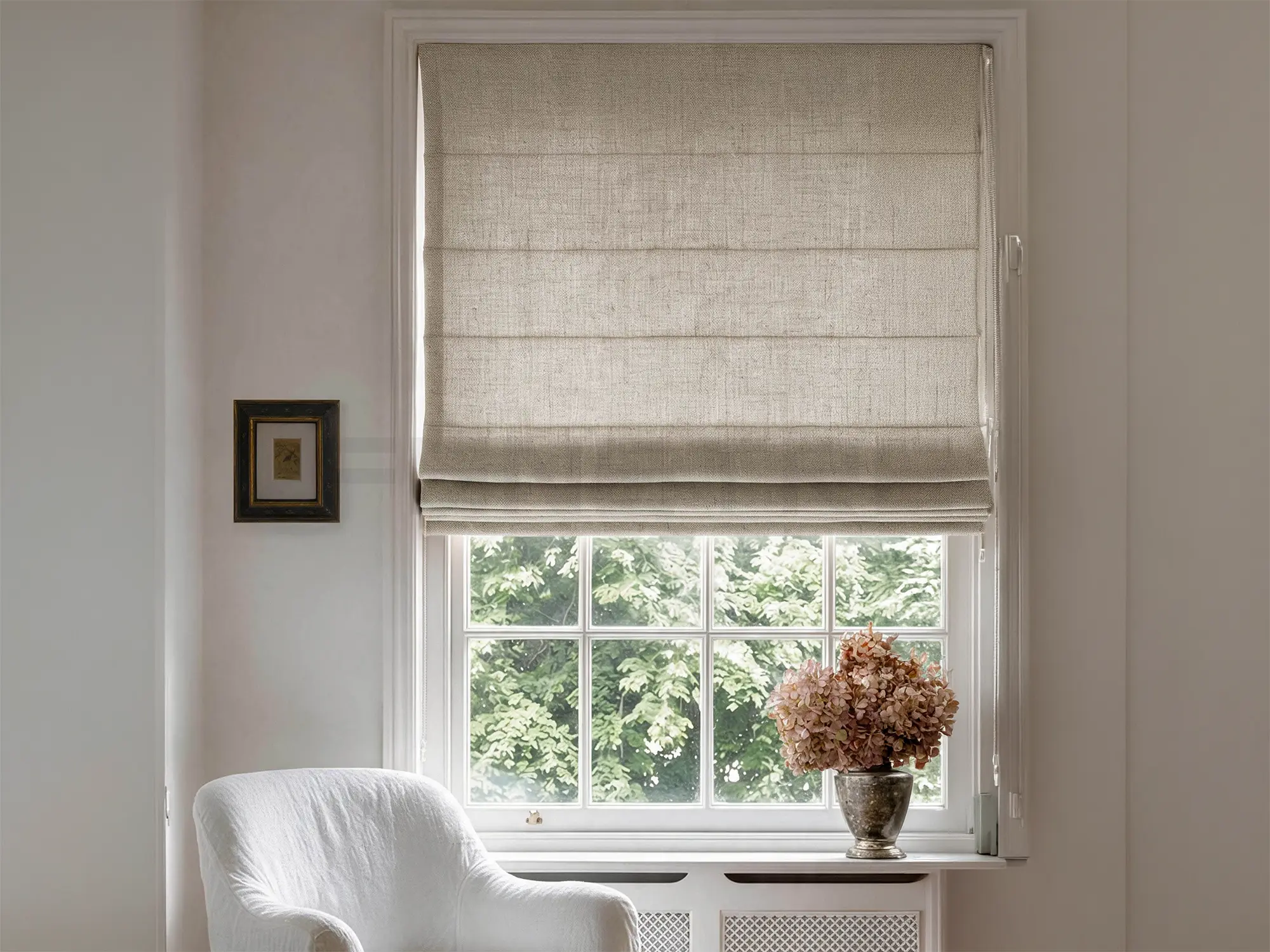
- Roman FoldsForms flat folds as it gathers.
- Drapery FabricProduced with home-textile fabrics.
- Decorative LookAdorns the window even while open.
Who Is the Roman Blind For?
- Lounge
- Bedroom
- Country Interiors
- Café
- Boutique
The decorative fold look dresses the window — it stays elegant even while open.
Roman Blind
- Stock Code:
- FS-PRD-07
- Availability:
- Built to Order
- Brand:
- FENETRE
- Category:
- Curtains
The drapery fabric is sewn to measure — it ships with the fold layout adjusted.
Produced with linen, taffeta and drapery fabrics — even while open it leaves an elegant layered look on the window.
Technical Specifications
Roman Blind specification sheet
- FabricDrapery home-textile fabric
- Drapery — Decorative
- TubeA headrail carrying the folds
- Aluminium
- MechanismA corded folding mechanism
- Geared Chain
- MountingTop or side carrier fixing
- Wall / Ceiling / Recess
- ControlGathers into flat folds
- Corded Folding
- CompatibilityDecorative interiors
- Home · Office
The headrail is screwed to the ceiling or the wall; the folds gather through a cord mechanism.
- The window opening’s width-height is taken (cm).
- The fabric type is written — linen, taffeta or drapery.
- The fold depth and the lining preference are recorded.
The fold count is taken by the height — the fabric type decides the fold appearance.
The Roman blind’s mechanism
The Roman blind is a system in which the fabric gathers by folding over horizontal battens — the cord mechanism lifts the fabric from below and the folds stack on top of each other. Lowered, it is a flat fabric surface; gathered, a decorative fold texture.
The fold spacing is set in production — narrow folds give a dense-textured look, wide folds a plainer surface. The fabric’s weight and thickness affect the fold form: thin fabric folds softly, thick fabric produces a sharp line.
The cord-and-ring layout sits on the back face — seen from the front the fabric gives a clean surface and no hardware shows; that aesthetics is what makes the Roman blind the choice in decorative spaces.
Fabric and room match
The Roman blind is part of home textiles — produced with linen, cotton and blended fabrics, it joins the curtain aesthetic with a mechanical layout. In lounges and bedrooms it replaces the roller where a soft look is wanted.
The fabric detaches for cleaning — released from the rail mechanism it is washed or dry-cleaned per its label. This feature is the core difference separating the Roman blind from technical blinds.
The lining option decides light and appearance — an unlined fabric filters daylight, a lined one gives shading and a tidy outside look; on a street-facing facade the lined version keeps the blind reading as a single colour from outside.
Fabric care and the measuring process
The fabric detaches from the rail mechanism — the fold battens and cords are sewn to the fabric; the fabric separates from the rail and cleans as a whole, and refitting is done preserving the fold alignment.
Measuring is taken over the opening — clear width and height for recess mounting, an overlap allowance on the wall plane; since the fold package sits on top, the space above the window is also asked.
Lining is sewn in production — a lined fabric is cut as two layers and the battens pass through both together; adding a lining later requires unsewing the fabric.
Mounting type and mechanism are taken by the access level — inside-rail or bracket, corded or motorised; the access condition makes the decision.
The attachment type is noted for fabric changes — a hook-and-loop or inside-rail connection decides how easily the fabric comes off, chosen by the washing plan.
Room and application selection
In kitchens the Roman blind is a practical choice — the folding fabric does not spill over the worktop and does not block work; a wipe-clean fabric withstands steam.
In children’s rooms the upward-gathering fabric is safer — hanging parts and chain access are minimised, and on the motorised version all control cords disappear.
In bedrooms a thick, textured fabric is used — the folds grow the fabric’s volume and break the light, providing aesthetics and light control together.
On a balcony door it gives full clearance — once the fabric gathers upward, the doorway is completely free; there is no passage obstacle.
Roman selection list
It meets the washable-fabric expectation — the removable fabric is washed at home or dry-cleaned; it renews without changing the mechanism.
A compact solution on small and medium windows — the upward-gathering fold package covers little of the glazing, keeping the look above the window clean.
The space can be renewed with a fabric change — the fabric swaps while the mechanism stays; a season or design change is made at low cost.
The folding layout is set in production by fabric weight — few, deep folds on heavy fabric, dense folds on light fabric; the ratio keeps the gathering balanced.
The space in front of the window stays usable — the upward-gathering fabric leaves the sill and worktop free; the area a hanging blind would restrict is free with a Roman.
The attachment type decides removal ease — hook-and-loop tape releases the fabric in a minute; on an inside-rail connection the fabric slides out from the end.
Questions About Roman Blind
Is a Roman blind washable?
Do the folds gather evenly?
Other Curtains Models
Roman Blind is built around roman folds, drapery fabric, decorative look. The remaining 7 models in the Curtains range are listed.
Roman Blind — Get a Price
Send the clear measurements and the fabric choice to receive the Roman-blind price.