
























Vertical Blind
Vertical blind. A system in which vertical fabric louvres collect on a rail — designed for wide glazed surfaces.
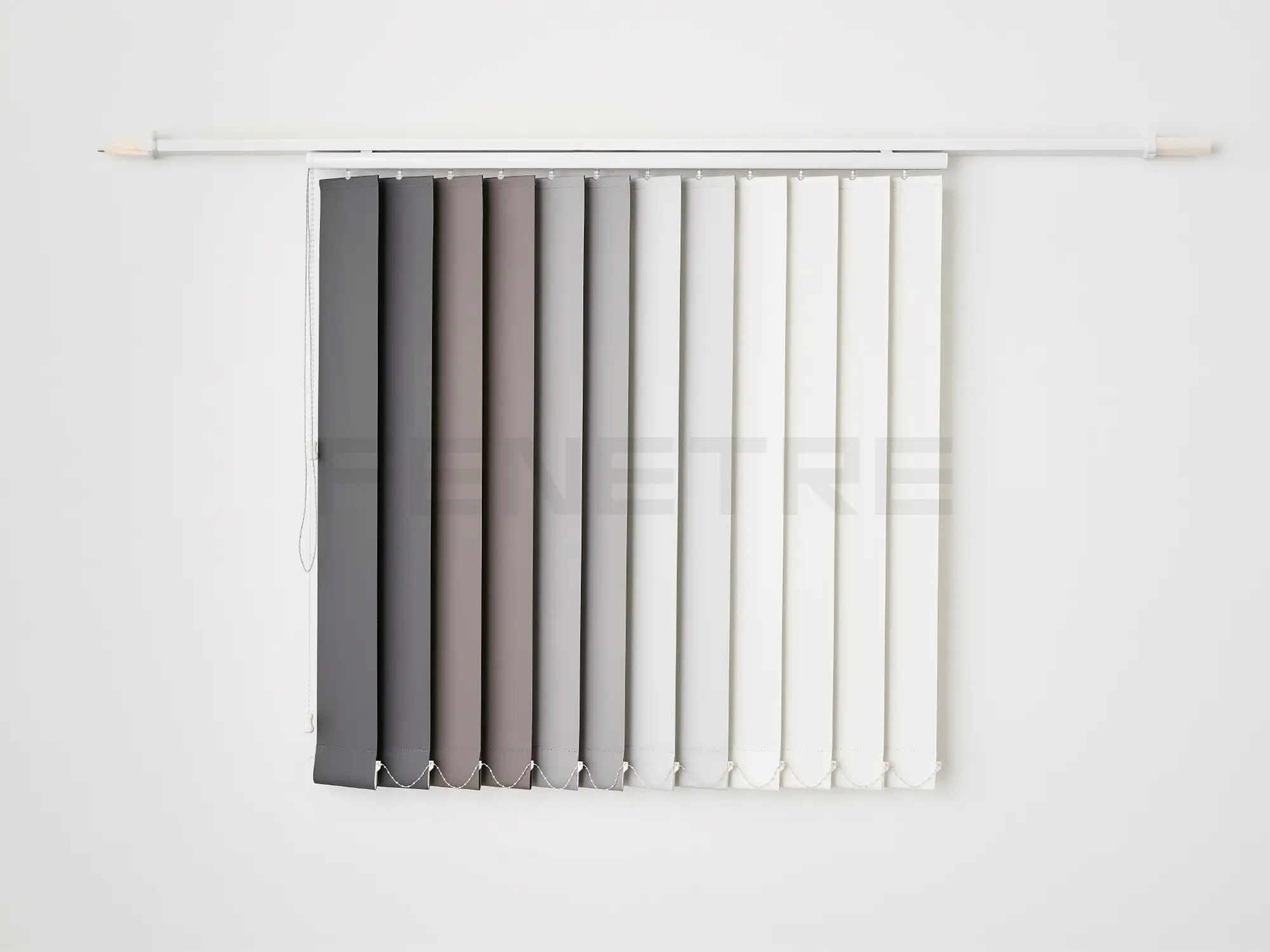
- Vertical LouvresFabric strips rotating on their axis.
- Wide SurfacesFull-height glazing and office partitions.
- Replaceable LouvreA single louvre can be renewed.
Who Is the Vertical Blind For?
- Office Partition
- Full-Height Glazing
- Wide Shopfront
- Meeting Room
- Showroom
Manages wide surfaces on a single rail — louvres are replaced independently.
Vertical Blind
- Stock Code:
- FS-PRD-04
- Availability:
- Produced to Order
- Brand:
- FENETRE
- Category:
- Curtains
The rail and louvre set are built to measure — every louvre is fitted independently.
The louvres rotate on their own axis and manage light in degrees — the classic solution for office partitions and full-height glazing.
Technical Specifications
Vertical Blind technical production data
- Louvre
- PVC / Fabric
- Louvre Width
- 89 / 127 mm
- MechanismLouvre collection and tilt control
- Chain + Wand
- MountingCeiling rail on wide surfaces
- Wall / Ceiling
- ControlLouvres rotate on their axis
- Traverse + Tilt
- Compatibility
- Office · Home
The rail profile holds to the ceiling or the wall line — the louvres hang on the carriers.
Each louvre is replaced individually — a spare-parts advantage.
- The wide surface’s total width-height is measured (cm).
- The side the louvres will collect to is written — one side or both.
- The clearance above the floor is noted.
Louvre length is taken so it does not touch the floor — skirting and tile allowances are included in the measurement.
How the vertical louvre system works
Carrier trolleys inside the top rail both draw and rotate the vertically hanging louvres — the louvres tilt up to 180 degrees and the light angle is adjusted precisely; the traverse function draws the louvres to the side and clears the opening completely.
Louvre width comes in two standard sizes — narrow louvres stack densely and look balanced on small openings; wide louvres give a calm look on large surfaces. Louvre length is produced to the window or door height.
The bottom link comes chained or chain-free — a chained bottom link fixes the louvres to each other and stops flapping in draughts; chain-free, the louvres swing independently and passing between them is easier.
The product for wide openings
The vertical blind is designed primarily for wide glazed facades — above three metres the mechanical limits of rollers and venetians are strained, while the vertical system keeps the same layout by splitting per louvre. It is the standard product of office facades.
The louvre material is PVC or fabric — PVC louvres wipe with a damp cloth and are chosen in heavy-use spaces like hospitals and schools; fabric louvres look softer in homes and offices.
When a single louvre is damaged, only that louvre is replaced — louvres hang separately from their carrier and the system is repaired without dismantling the whole; the part-based logic keeps the long-term running cost low.
Rail, louvres and collection direction
The vertical rail is fitted to the ceiling or the wall line — the surface the rail mounts on sets the louvres’ fall line; a ceiling rail drops the louvres from the highest point and makes the window look larger.
The collection direction is taken by the passage line — the louvres stack right, left or split to both sides; the balcony door’s passage direction and furniture position decide the collection.
Choosing the use area
On wide sliding doors and glazed facades the vertical blind is the base solution — its horizontal travel matches the door passage and the louvres slide in the door’s direction.
In offices and meeting rooms light management is precise — the louvre angle follows the sun through the hours and screen glare is cut without ever collecting the blind.
It is also used as a room divider — on a glazed or open span between two volumes the vertical blind gives a visual separation; in the open position the space rejoins.
In high-ceilinged spaces the louvre length is scaled — tall openings take long louvres and the bottom chain does not reach the floor; it is produced to measure.
Production notes for the order
Louvre width and count are taken from the opening measurement — 89 mm or 127 mm louvres are set by the opening; the rail length decides the louvre count.
The control side and the opening style are taken by user preference — one-way, two-way or centre opening; the room’s layout makes the decision.
Collection decision list
On wide glazed facades and sliding doors the vertical blind is the first option — horizontal travel matches the door passage and it closes openings of unlimited width.
In offices and commercial spaces it is a long-lived solution — louvre-based replacement keeps costs low; a single louvre is changed without renewing the whole blind.
In home use fabric louvres are chosen — PVC and aluminium look corporate; fabric louvres keep the residential warmth and soften sound echo.
Rail length and louvre count are taken by the opening — rail sections are joined to the span and the louvre count is set in production; everything is produced from a single measurement.
Questions About Vertical Blind
Is a vertical blind suitable for a home?
If a louvre tears, does the whole blind change?
Other Curtains Models
Vertical Blind is built around vertical louvres, wide surfaces, replaceable louvre. The remaining 7 models in the Curtains range are listed.
Vertical Blind — Get a Price
Send the surface measurements and the collection direction to receive the vertical-blind price.