
























Screen Blind
Screen blind. A technical-fabric blind system that filters sunlight while preserving the outside view.
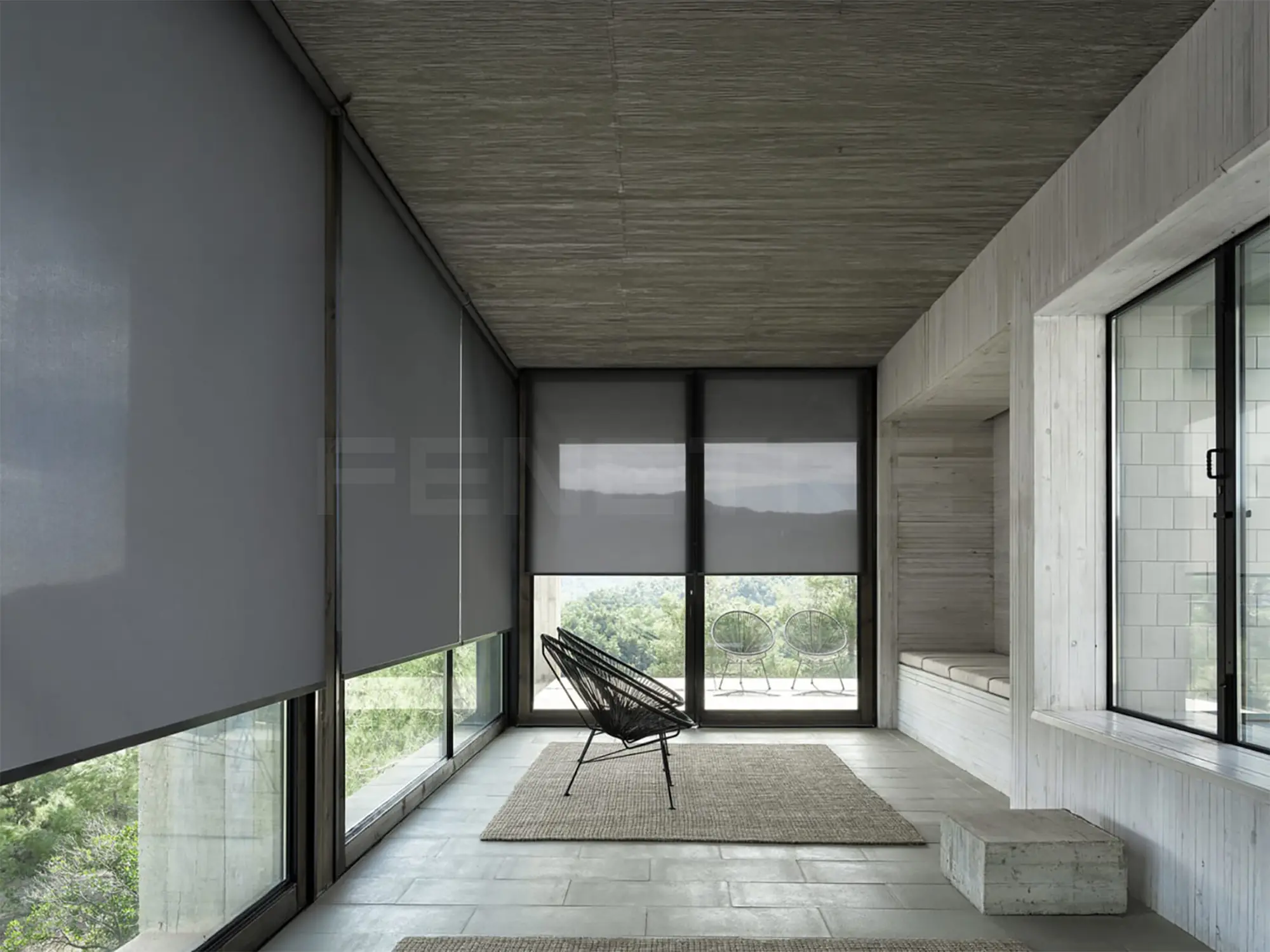
- Keeps the ViewFilters the sun, still shows outside.
- UV FilterReduces glare and heat gain.
- Factor Options1–5% openness available.
Who Is the Screen Blind For?
- Office
- South Facade
- Work Area
- Shopfront
- Meeting Room
Keeps the outside view while filtering the sun — reduces screen glare.
Screen Blind
- Stock Code:
- FS-PRD-03
- Availability:
- Built to Order
- Brand:
- FENETRE
- Category:
- Curtains
The screen fabric is fitted at the chosen openness factor to clear measure — the filtering performance remains.
In offices it cuts screen glare and on south facades reduces heat gain — an openness factor is chosen.
Technical Specifications
Screen Blind build data
- FabricTechnical fabric with an openness factor
- Screen (Sun Filtering)
- TubeA tightly wound tube
- Aluminium
- MechanismA mechanism with balanced tension
- Geared Chain
- MountingFits three different surfaces
- Wall / Ceiling / Recess
- ControlFiltering that keeps the view
- Chain (opt. Motorised)
- CompatibilitySouth facades and offices
- Home · Office
The screen fabric winds onto the tube — the brackets hold to the wall or the ceiling.
Fabric tension is set according to the openness factor.
- The glazing’s clear width and height are taken (cm).
- The sun direction and the glare need are noted.
- The openness-factor choice is written — 1%, 3% or 5%.
The openness factor chooses the view–sun balance — a recommendation is made from the facade information.
What the openness factor means
The screen fabric’s weave density is given as a percentage — 1% openness is the tightest weave and gives the most shading, while 10% gives the most open view. On the same-looking fabric the openness factor chooses how much of the outside you see from inside.
The factor is chosen by facade direction — on south and west facades 1–3% cuts the sun load; on north and shaded facades 5–10% preserves the natural light. This figure is a technical value independent of the fabric colour.
The screen fabric’s UV-cut rate relates to the openness — a tight weave stops most UV rays and reduces fading of parquet, carpets and furniture. On sun-facing facades this protection alone is a reason to choose it.
Day and night behaviour
By day the screen blind shows the outside from inside but does not show the inside from outside — the light difference creates this one-way view, so street-facing privacy needs no extra adjustment in daylight hours.
At night, when interior lighting comes on, the balance reverses — the lit interior becomes visible from outside. In spaces wanting evening privacy the screen alone is not enough; this limit is the product’s nature.
In offices where people work at screens, the screen blind is ideal — it cuts the bright sun falling on the monitor without closing the outside view; that is why it is the standard product on large glazed office facades.
Facade and openness calculation
The facade direction chooses the openness factor — on south and west facades a 1–3% tight weave holds the radiation; on a north facade 5–10% preserves natural light. Two different factors can be used in the same building.
Fabric colour changes heat behaviour — a dark fabric absorbs radiation and warms up in front of the glass, while a light colour reflects it and lets less heat inside. View clarity also changes with colour: a dark fabric shows the outside more sharply.
On wide facades the screen works with roller logic — same tube and mechanism, but the fabric is the technical series; the unit count is derived from the glazing bays and a batch production list is built.
Use area and the view
In lounges with a panorama the view comes first — a sea, forest or city view stays visible behind the screen; even with the blind down, the outside does not disappear.
In restaurants and cafés the screen both shades and preserves the view — the customer sees outside while staying protected from the sun; the open-air feel is not cut by the blind.
Production plan and order notes
The mounting type and measurement are taken by the joinery condition — recess or wall mounting decides the measurement type; a clear or cover measurement is noted.
A companion-blind combination is set up on the order — for night privacy a curtain or blackout combination is considered in the same order.
Openness-factor list
In spaces used mainly by day the screen is ideal — in offices, studies and lounges the daylight is preserved while the glare is cut.
The night-privacy expectation is arranged separately — once the interior light is on, the inside becomes visible; a curtain or blackout combination is needed.
The openness factor is chosen from the sample — options between 1% and 5% offer different light-view balances; the room’s direction and use make the decision.
A cleaning routine preserves the weave texture — the open weave holds dust and is wiped regularly; a stiff brush or abrasive cleaner deforms the pores.
Questions About Screen Blind
Does a screen blind give privacy at night?
Which openness factor should be chosen?
Other Curtains Models
Screen Blind is built around keeps the view, uv filter, factor options. The remaining 7 models in the Curtains range are listed.
Screen Blind — Enquire About Ordering
State the measurements and the facade side to receive the openness factor and price.