
























Zebra Blind
Zebra blind. A system of sheer and opaque bands in two layers that adjusts light without opening the blind.
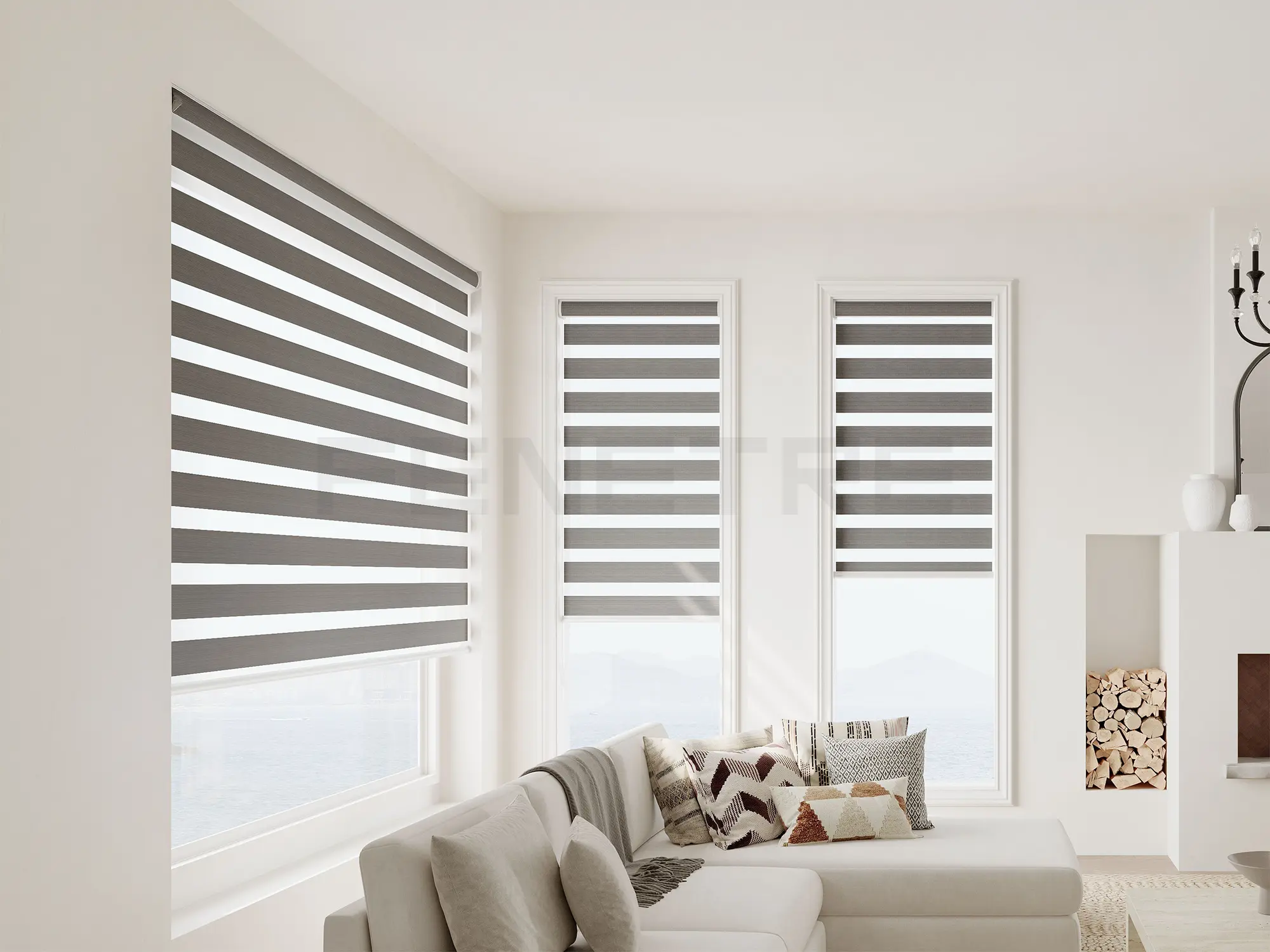
- Dual LayerLight control with sheer-opaque bands.
- Control Without OpeningGraded light through band shift.
- Chain MechanismThe standard use layout.
Who Is the Zebra Blind For?
- Lounge
- Children’s Room
- Office
- Living Room
- Hotel Room
Adjusts light in steps by sliding the bands — without opening the blind.
Zebra Blind
- Stock Code:
- FS-PRD-02
- Availability:
- Built to Order
- Brand:
- FENETRE
- Category:
- Curtains
The dual-layer fabric and the mechanism are matched to measure — it arrives with band alignment set.
Aligning the bands admits daylight; sliding them provides privacy — you keep control even while the blind is closed.
Technical Specifications
Zebra Blind build data
- FabricSheer-and-opaque banded fabric
- Zebra Dual Layer
- TubeA tube winding two layers
- Aluminium
- MechanismBand alignment adjustable
- Geared Chain
- MountingWall, ceiling or recess mounting
- Wall / Ceiling / Recess
- ControlGraded light through the bands
- Chain (opt. Motorised)
- CompatibilityLiving and work-area windows
- Home · Office
The dual-layer unit seats on mounting brackets; the tube plane is aligned.
Band alignment is set during installation.
- The window opening’s width and height are taken (cm).
- The band colour and texture preference is recorded.
- The chain side and the mounting surface are noted.
Band width is balanced to the glazing size — on patterned fabrics alignment is included in the measurement.
The dual-layer band layout
The zebra blind is a single fabric in two layers — opaque and sheer bands alternate, and the two layers slide over each other. When the bands overlap, light passes; when shifted, it closes. Instead of opening and closing, you align.
This layout gives step-free light control — there are infinite intermediate states between fully open, half-open and closed, doing on a single fabric surface what the louvre tilt does on a venetian.
The fabric’s lower end rotates around the tube — in the closed position the two layers overlap and the opaque bands complete each other. It should not be confused with full blackout: a zebra passes a thin line of light through its band gaps.
Use area and care
On office and lounge windows the zebra covers day-and-night needs in one product — by day the sheer bands align and the outside view remains; in the evening the opaque bands are overlapped and the interior is closed.
The fabric’s dual-layer build collects dust — the space between the layers is wiped carefully with a lint-free cloth; a damp cloth does no harm but rubbing can shift the band alignment.
The cassette model protects the fabric from dust — chosen in greasy places like kitchens; the cassette-free type does the same job but leaves the fabric exposed. The room’s dust and humidity decide the cassette.
In a study the sheer-opaque transition is practical — the band angle is changed through the day to manage screen glare; light is provided without ever lifting the blind.
In kitchens a wipe-clean zebra fabric is chosen — steam and grease stick to the fabric; the wipeable series cleans with a damp cloth.
Zebra measuring and mounting
The zebra unit works to fabric width — the fabric is cut precisely so the two layers align; the edge allowance is taken in production and the clear-opening measurement is enough.
On inside-recess mounting the cassette depth is asked — the dual-layer fabric’s tube package is thicker than a single layer; on a slim recess the cassette-free version or the wall plane is considered.
The mechanism side is assigned by the daily access layout — the chain hangs from the right or left; furniture and radiator positions in front of the window decide the chain side.
Band alignment settles on the first run — the two layers are wound aligned in production; a band that shifted in transit corrects itself on the first open-close.
For office use the unit count is derived from the facade bays — each glazed bay gets its own unit, and the chain side is assigned by desk position; on batch production the bay list is numbered.
Space and use selection
In living spaces the zebra stands out visually — the banded fabric texture differs from a plain blind and adds a decorative layer; light control is done by band adjustment.
On wide windows a split zebra is fitted — where a single mechanism is strained, two units work side by side and the band alignments start at the same level.
Order flow and production notes
The fabric series and colour are chosen from the range card — band pattern, opacity and colour are taken by the room’s use; a sample fabric is sent.
The chain side and the safety retainer are written on the order — in homes with children the chain ties to the retainer; on the motorised version the chain becomes unnecessary.
Band selection list
Suits those who want to change light and view instantly — control is done by sliding the bands without ever lifting the blind, giving flexible use through the day.
It meets the decorative-appearance expectation — the banded texture separates from plain fabric and makes the window part of the room; patterned series offer extra options.
A full-darkness expectation is redirected to blackout — thin lines remain between the zebra bands; where night darkness is required the blackout series is chosen.
On multi-unit windows the band alignment is set in production — on blinds fitted side by side the bands start at the same level, keeping visual integrity.
The dual-layer fabric’s weight decides the mechanism — zebra fabric is heavier than roller fabric, so a reinforced mechanism and a thicker chain are used.
The washing instruction stays with the fabric type — removable zebra fabric is washable but not ironed; the band layout is checked after washing.
Questions About Zebra Blind
Does a zebra blind close fully?
Do the bands slip over time?
Other Curtains Models
Zebra Blind is built around dual layer, control without opening, chain mechanism. The remaining 7 models in the Curtains range are listed.
Zebra Blind — Request a Quote
Send the glazing measurements and band colour to receive the zebra-blind price.